BUsiness of Animal Welfare
Pursuing the End of Primate Testing
How the illegal long-tailed macaque trade fuels U.S. primate testing
By Ted Williams
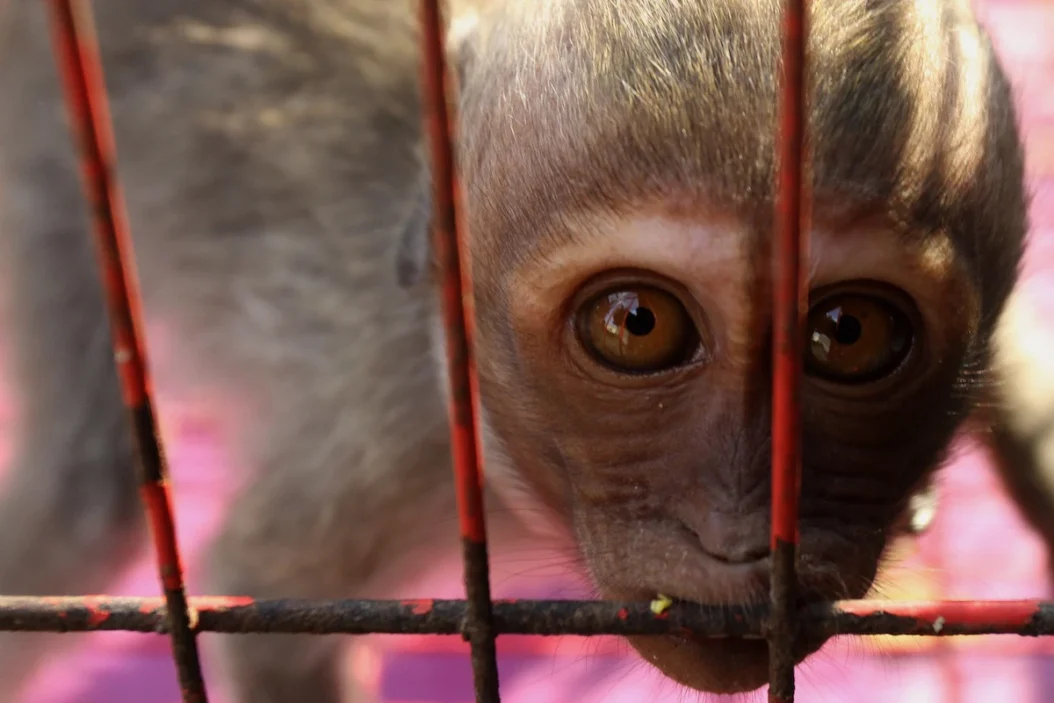
The most significant shift in U.S. biomedical research policy in a generation is taking shape as federal agencies reassess primate testing and outdated animal research models.
First, the Food and Drug Administration (FDA) and the National Institutes of Health (NIH) signaled a transition away from animal testing. Then, in a watershed directive, the Centers for Disease Control and Prevention (CDC) announced that it will end its primate research program, shuttering a decades-long reliance on macaques for infectious disease studies and vaccine development.
What’s more, FDA has issued a new signaled, “Monoclonal Antibodies: Streamlined Nonclinical Safety Studies.” It outlines how six-month primate toxicity studies can be reduced or eliminated. The agency emphasized that its regulatory decisions increasingly rely on tools such as computerized toxicology models and organoids (miniature, 3D organ-like structures lab-grown from stem cells that mimic the function and structure of real organs).
The news sent shockwaves through proponents of more humane testing methods, as well as the scientific and medical communities. Immediately, stock prices fell for animal suppliers and the laboratories that subject animals to medical experiments. Plans for an animal-free drug-development paradigm—once unthinkable—were the buzz of board meetings and science conferences across the globe.
Why Primate Testing Fails Modern Science
Experts report that 90-95% of drugs that pass animal testing fail during human clinical trials, highlighting a significant disconnect between animal models and human biology. Of 85 potential AIDS vaccines tested in 197 human trials, not one was successful, despite passing muster in chimpanzees. This high failure rate not only delays the availability of effective treatments but also contributes to soaring drug development costs, which can exceed $2 billion per drug.
Moreover, reliance on animal testing can lead to premature abandonment of potentially life-saving drugs that show no benefit in animals but might be effective in humans. Recognizing these issues, legislative efforts like the FDA Modernization Act 2.0 (led by Animal Wellness Action and the Center for a Humane Economy) have been enacted. They promote more accurate, human-relevant testing methods that enhance drug safety and efficacy while reducing unnecessary animal suffering
The poaching for biomedical research is so extensive, it has caused a precipitous population decline, resulting in the placement of the species on the endangered list of the International Union for Conservation of Nature in March 2022.
A Global Pipeline of Primates — and Cruelty
Despite all the good news in the U.S., major problems persist worldwide. Drug developers and other researchers still default to primate use. That’s built into their muscle memory, even though these “models” are essentially useless for drug screening.
This means there is still a booming market for simian lab subjects, especially long-tailed macaques, the most heavily traded primate in the world. Such is the current demand that a single animal can fetch $60,000. In this country alone, the U.S. Fish and Wildlife Service reports that just between January 2018 and June 2020, 45,822 long-tailed macaques were imported to the U.S. from China, 22,707 from Cambodia, 9,303 from Mauritius, 1,320 from Vietnam, and 1,050 from the Philippines — all for lab experiments.
The poaching for biomedical research is so extensive, it has caused a precipitous population decline, resulting in the placement of the species on the endangered list of the International Union for Conservation of Nature in March 2022. Those who are captured for this use suffer greatly, with smuggled macaques frequently shipped in crates so small they can’t move, and they suffer in extended periods of hot and cold weather.
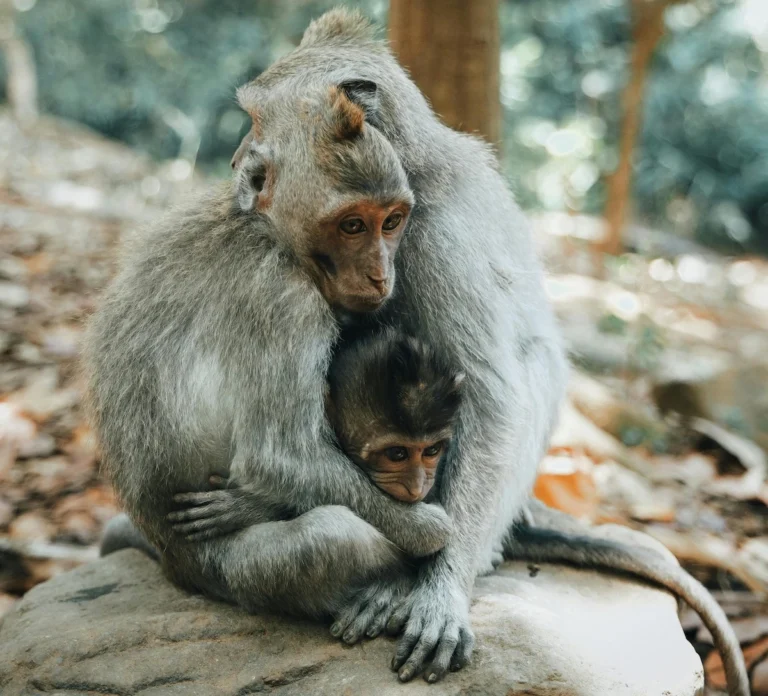
Inside the Criminal Networks Supplying the Primate Trade
A report by Sandy River Research, an independent investigative group specializing in uncovering unethical practices within global industries, provides compelling evidence that macaque exports from breeding facilities in Cambodia, Vietnam, and Laos are, with assistance from corrupt officials, heavily supplemented with animals illegally taken from the wild. Thai authorities recently intercepted 81 macaques near the Cambodian border. The animals had been packed into net bags alongside methamphetamine, demonstrating the involvement of organized criminal networks.
Birth rates reported by breeders are sufficiently high to be biologically impossible, revealing the covert supply chain that makes up the difference. For example, in September 2022, Cambodia reported that its breeding facilities housed 137,359 long-tailed macaques and that 73,016 had been born in a single month. But only two years earlier, the facilities’ entire population numbered 69,215.
In response to the COVID pandemic, China outlawed the export and import of monkeys (and all wildlife) in 2020, but two years later, it resumed imports to supply its growing pharmaceutical sector and the surge in drug development programs.
To meet the demand created by COVID vaccine testing and China’s export ban, Cambodia increased its macaque exports by 99 percent.
That spike caught the attention of the Convention on International Trade in Endangered Species (CITES). On January 10, 2025, the CITES secretariat reported “credible information concerning the illegal export of specimens of wild-caught [long-tailed macaques],” which indicated that as many as 50,000 wild macaques had been laundered through just one of Cambodia’s eight breeding facilities.
In 2022, U.S. federal prosecutors indicted eight people, including two Cambodian forestry officials, for alleged smuggling of long-tailed macaques. The officials were accused of colluding with the Hong Kong-based biomedical firm Vanny Bio Research to procure macaques from the wild and falsify export permits listing them as captive-bred.
The prosecutors failed to secure convictions, but in 2025, CITES suspended Cambodian trade in long-tailed macaques.
Other primates are imperiled by illegal macaque traffic — humans, for example.
- Investigations by veterinary and health authorities found that inadequate safety measures at Vietnamese monkey breeding and export facilities allowed tuberculosis bacteria to spread there and to labs around the world that purchased infected animals.
- In 2019, a long-tailed macaque scheduled for stem-cell research at the Oregon Health and Science University tested positive for TB, rendering the entire shipment unusable.
- In February 2023, a TB outbreak was detected during a CDC-mandated quarantine in a shipment of 540 long-tailed macaques imported to the U.S. for biomedical research.
- On April 10, 2025, the FDA announced that its animal testing requirement will be reduced, refined, or potentially replaced with the aim of making animal testing the exception rather than the norm within three to five years. “For too long, drug manufacturers have performed additional animal testing of drugs that have data in broad human use internationally,” said FDA Commissioner Dr. Martin A. Makary. “This initiative marks a paradigm shift in drug evaluation and holds promise to accelerate cures and meaningful treatments for Americans while reducing animal use.”
Wayne Pacelle, president and founder of Animal Wellness Action and the Center for a Humane Economy, praised FDA’s, CDC’s and NIH’s decisions and offered this: “It’s time to move away from tormenting monkeys for drug screening and other laboratory uses and choose cost-effective and human-relevant research models that represent best practices in science. It’s the very definition of insanity to keep doing something that doesn’t work over and over again and to then expect a different result. And that’s the reality of primate testing in American science.”
The global macaque trade and the failures of primate testing underscore the urgent need for human-relevant research models that are safer, more ethical, and scientifically sound, he added.
Ted Williams, a lifelong hunter and angler, is a former information officer for the Massachusetts Division of Fisheries and Wildlife. He writes exclusively about fish and wildlife.
FAQ: Your Questions About the Primate-Testing Crisis, Answered
Why are long-tailed macaques used in laboratories?
They have been used for decades in drug and vaccine research, but today we know that primates often fail to predict human responses. Their use causes suffering and rarely delivers the breakthroughs people are counting on.
What’s wrong with the global macaque trade?
Many macaques sold to U.S. labs are illegally taken from the wild and funneled through corrupt networks overseas. This trade is cruel, dangerous, and increasingly linked to organized crime.
Does importing primates pose risks to people?
Yes. Macaques can carry serious diseases — such as tuberculosis — that can spread through breeding centers or into U.S. laboratories. These risks make primate imports a public-health concern, not just an ethical one.
Are federal agencies moving away from primate testing?c
They are. The FDA, NIH, and CDC are shifting toward modern, human-relevant research tools because animal testing often fails. This change represents one of the most hopeful scientific reforms in decades.
Why should primate testing end?
It causes immense suffering and too often leads to dead ends in drug development. Investing in human-based research models offers better science, greater safety, and a more compassionate future.
How can individuals make a difference?
Your support helps expose illegal wildlife trafficking, advance federal reforms, and promote humane, effective research alternatives. Together, we can end primate testing and protect both animals and people.
Other Business Posts