
Frequently Asked Questions
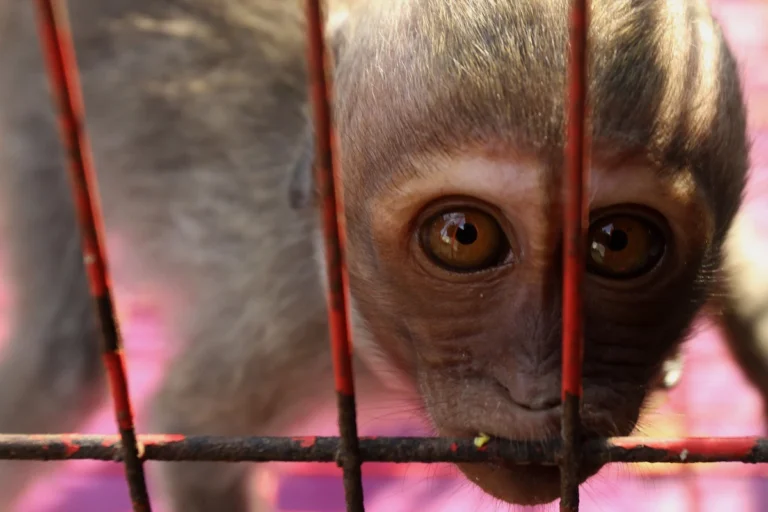
Your Questions About the Primate-Testing Crisis, Answered
Why are long-tailed macaques used in laboratories?
They have been used for decades in drug and vaccine research, but today we know that primates often fail to predict human responses. Their use causes suffering and rarely delivers the breakthroughs people are counting on.
What’s wrong with the global macaque trade?
Many macaques sold to U.S. labs are illegally taken from the wild and funneled through corrupt networks overseas. This trade is cruel, dangerous, and increasingly linked to organized crime.
Does importing primates pose risks to people?
Yes. Macaques can carry serious diseases — such as tuberculosis — that can spread through breeding centers or into U.S. laboratories. These risks make primate imports a public-health concern, not just an ethical one.
Are federal agencies moving away from primate testing?
They are. The FDA, NIH, and CDC are shifting toward modern, human-relevant research tools because animal testing often fails. This change represents one of the most hopeful scientific reforms in decades.
Why should primate testing end?
It causes immense suffering and too often leads to dead ends in drug development. Investing in human-based research models offers better science, greater safety, and a more compassionate future.
How can individuals make a difference?
Your support helps expose illegal wildlife trafficking, advance federal reforms, and promote humane, effective research alternatives. Together, we can end primate testing and protect both animals and people.