

Paeans of praise are surfacing online among Mexican and American cockfighters after the killing of the “Lord of the Roosters” — one of the hemisphere’s most violent criminals who was obsessed with cockfighting
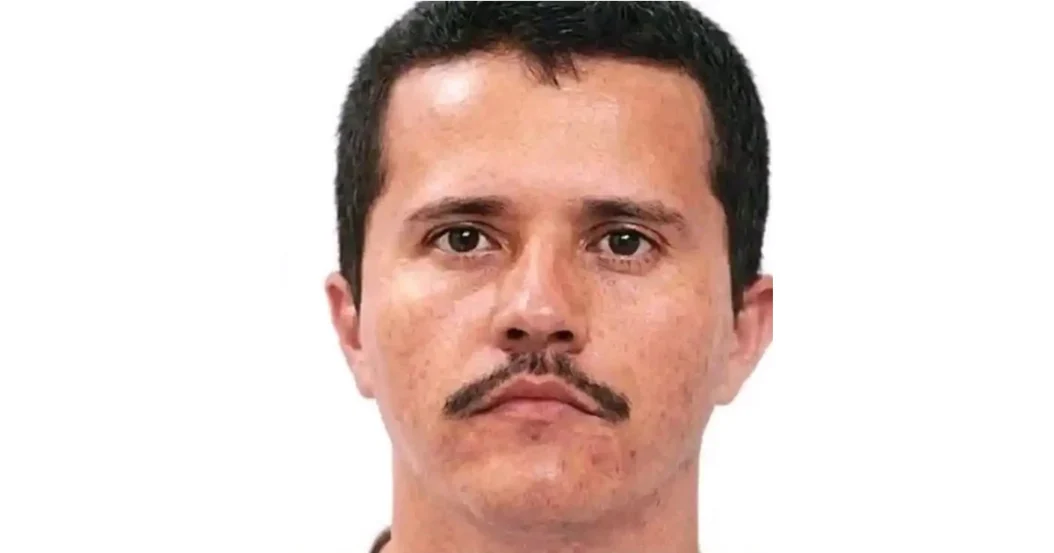
Washington, D.C. – Underscoring the connection between malicious animal abuse and violence against people, the Mexican government’s killing this week of Nemesio “El Mencho” Oseguera Cervantes of the Jalisco New Generation Cartel (CJNG) has brought to light the ruthless drug lord’s obsession with cockfighting. The Center for a Humane Economy and Animal Wellness Action have conducted a running series of investigations that have revealed the illicit commerce between U.S.-based cockfighters and Mexican cartels that control animal fighting venues in that country.
The organizations note that the House Committee on Agriculture has an opportunity, during its consideration of the Farm Bill, to pass legislation to strengthen our national law against cockfighting and dogfighting and crack down on an animal fighting trade bound up with cartels and other organized crime interests. The National Sheriffs’ Association is helping lead that fight, noting “animal fighting investigations have uncovered intricate criminal networks and connections to organized crime, trafficking narcotics, illegal firearms, and attempted bribery of elected officials.”
According to reports, Oseguera — nicknamed “El Señor de los Gallos” (“The Lord of the Roosters”) due to his deep involvement in cockfighting — led one of the most violent criminal organizations in North America. After his death in a military operation, cartel members across dozens of Mexican states staged widespread retaliatory attacks, burning vehicles, blocking roads, and targeting security forces and civilians alike. At least 74 people have been killed.
“U.S.-based cockfighters are suppliers of perhaps hundreds of thousands of cockfighting birds to Mexican cartels annually, with a trio of fighting birds selling for as much as $5,000,” said Wayne Pacelle, president of the Center for a Humane Economy and Animal Wellness Action. “This cross-border trafficking also involves money laundering, trafficking drugs and weapons, and transnational violence, with billions illegally wagered on cockfights in Mexico.”
In November 2024, U.S. authorities arrested Cristian Fernando Gutierrez-Ochoa, son-in-law of “El Mencho,” in Riverside, Calif., accusing him of drug trafficking and money laundering after living under a false identity created by the cartel boss. Gutierrez Ochoa was also deeply involved in cockfighting, which is a federal felony under U.S. law.
Mass shootings and other violence have flared at cockfights — supplied by U.S. cockfighters who are consorting with these organized crime associations:
- In December 2024, four people were murdered at a Mexican cockfighting arena, including “El Chabelo,” a leader of the Sinaloa Cartel.
- In January 2024, at a cockfighting derby in Guerrero, there was a mass shooting at a cockfight in a case of cartel-on-cartel violence, with a 16-year-old boy from Washington state murdered.
- Months before, also in Mexico, 20 people were massacred at a cockfighting derby, including a Chicago woman.
- In April 2025, there were 12 people murdered at a cockfight in Ecuador, where “President Daniel Noboa has said that about 70% of the world’s cocaine now flows through Ecuador’s ports before being shipped to the U.S. and Europe,” as reported by the BBC.
- It’s been reported that perhaps 400 people in the Philippines have been murdered in disputes over the activity, including over debts from rampant on-line gambling (known as “e-sabong”).
In January 2026, the Center for a Humane Economy and Animal Wellness Action had investigators at the World Slasher Cup and documented American cockfighters at the center of the fighting pits there, illegally transporting their birds for combat there and illegally selling their animals. In one year alone, there was more than $13 billion wagered in the Philippines on e-sabong (on-line cockfighting).
Some major U.S. cockfighters have breeding and fighting operations on both sides of the border that supply drug lords and other organized criminals. Brent Easterling, of Verbena, Alabama, arrested in 2022, was one of those operators with cockfighting complexes both in the United States and in Mexico. The top two destinations for U.S.-reared fighting birds are Mexico and the Philippines, where cockfighting pits are typically controlled by organized crime syndicates.
The FIGHT Act, introduced as H.R. 3946 by Reps. Don Bacon, R-Neb., and Andrea Salinas, D-Ore., and as S. 1454 by Sens. John Kennedy, R-La., and Cory Booker, D-N.J., would strengthen federal statutes against organized animal fighting by giving law enforcement the tools needed to root out these criminal networks and disrupt illegal trafficking of animals and associated contraband. A second bill, by Rep. Troy Nehls, former Fort Bend County sheriff, also has attracted bipartisan support and would halt trafficking of fighting birds via major airlines.
“When local and federal law enforcement make arrests of animal fighters, you can count on apprehending people involved in other crimes,” Pacelle added. “Cockfights are gathering places for criminals, including cartel and gang members whose illicit activities tear at the fabric of a civil society. Interdictions of animal fighters and animal traffickers strike at the international collaborators fueling violence and instability across our border.”
The FIGHT Act and the No Flight, No Fight Act:
- Prohibit gambling on live and simulcast animal fighting ventures;
- Halt the shipment of mature roosters (chickens only) through the U.S. mail and by commercial airlines;
- Enhance forfeiture provisions to encompass real property in cases involving animal fighting crimes; and
- Give citizens menaced by animal fighters a civil proceeding option to win a court order to shut down the illegal fighting operation.
The Center and Animal Wellness Action urge lawmakers to pass the FIGHT Act when the Farm Bill is taken up in the House next week. The organization is also urging the Transportation and Infrastructure Committee to focus on legislation to stop air transports of fighting animals originating in the United States and bound for Mexico and the Philippines where organized crime interests eagerly await the transports.