


COLUMBUS, Ohio — Ohio this week becomes the 11th state to limit the use of gestation crates for breeding sows, ending a practice that severely confines pigs in metal enclosures so small they are unable to turn around or fully extend their limbs.
The policy’s implementation fulfills the final provision of a landmark eight-point animal welfare agreement reached 15 years ago between animal advocates and Ohio’s leading agricultural organizations.
“This moment has been a long time coming,” said Wayne Pacelle, president of Animal Wellness Action and the Center for a Humane Economy. “Immobilizing a breed sow for as long as three years in a crate barely larger the animal’s body is inhumane at its core.”
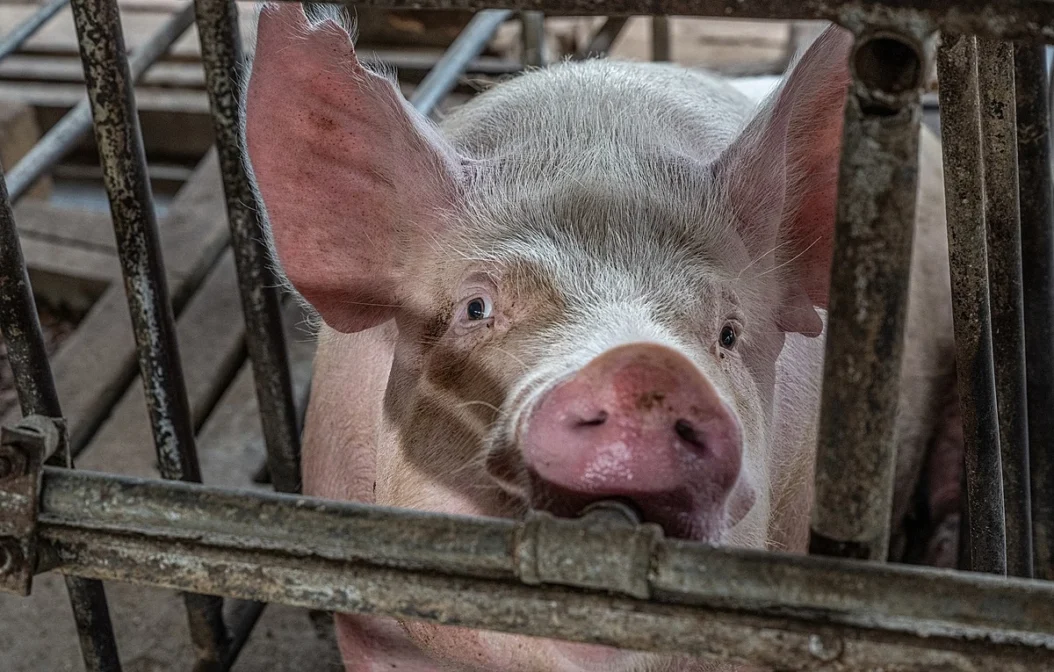
The gestation crate phase-out was negotiated in 2010 as part of an agreement between Pacelle, then organizing the Ohioans for Humane Farms coalition, and leaders of major farm groups including the Ohio Farm Bureau Federation, the Ohio Pork Producers’ Council, and the Ohio Poultry Association. At the time, Ohioans for Humane Farms had collected more than 650,000 signatures to place a ballot initiative before voters that would have banned extreme confinement of sows, veal calves, and laying hens.
Rather than proceed with a expensive and hotly contested statewide ballot fight, the parties reached a compromise that included a 15-year phase-out of gestation crates, an accelerated phase-out of veal crates, a halt to new battery cage construction for laying hens, and a broader package of animal protection reforms.
Those reforms included felony penalties for cockfighting, stronger standards for commercial dog breeders, a ban on dragging and slaughtering “downer” cows, and a prohibition on private ownership of dangerous wild animals. While legislative action on some provisions was delayed, most were ultimately enacted.
The provision in the agreement to private ownership of dangerous carnivores was negotiated in the summer of 2010, but that provision only came into law after a Zanesville tragedy in which a private exotic animal owner intentionally released dozens of lions, tigers, tigers, bears, and other animals into the town and then shot himself in the head. This mass release of powerful animals into a populated community forced law enforcement to kill the dangerous animals freely roaming the city streets. The startling and horrific news story made worldwide headlines.
“While the agreement was imperfect for all sides, it was by far the broadest advance in animal welfare policy in the state, reshaping the use of animals in agriculture, the pet trade, staged fighting, and exotic animal trade in Ohio,” Pacelle said.
The gestation crate ban takes effect amid sweeping changes in U.S. agriculture. In 2010, just 3% to 4% of the nation’s laying hens were cage-free; today, that figure stands at approximately 46%. More than 60 major U.S. food retailers — representing over 90% of food sales — have adopted policies opposing gestation crates and battery cages.
“Thanks to this agreement, Ohio farmers are now far more aligned with consumer expectations and market realities,” Pacelle said.” Now 15 years after the agreement was brokered, Pacelle added that Ohioans can take pride in their state’s strengthened animal welfare laws and leadership in advancing humane agricultural standards.