
Our Successes (2018–2026)
Corporate Impact Summary:
In just six years, the Center for a Humane Economy has built a track record of reshaping the behavior of corporations and sectors of the national and global economy that profit from animal exploitation and driving alternate forms of commerce not grounded on that kind of harm. By promoting animal protection values in corporate decision-making and working to eliminate particularly cruel practices long driven by profit, the Center has achieved landmark victories across multiple industries — from pharmaceuticals and agriculture to entertainment and commercial trafficking of animals.
Modernizing the $1.35 Trillion Pharmaceutical Industry and Reducing Animal Testing

Through our Modernize Testing campaign, the Center led efforts to end the federal mandate for animal testing in drug development. Passage of the FDA Modernization Act 2.0, followed by public commitments from FDA Commissioner Marty Makary, Health and Human Services Secretary Robert F. Kennedy Jr., and NIH Director Jay Bhattacharya to wind down the use of animals in testing signaled a national pivot toward non-animal testing technologies. These congressional policies and executive agency actions are already reverberating across the entire global pharmaceutical sector, offering the prospect of driving down numbers of animals used and the price of drugs, while making drugs safer and expanding the pool of drug development projects to address a wide range of diseases.
Ending Kangaroo Leather in Athletic Footwear
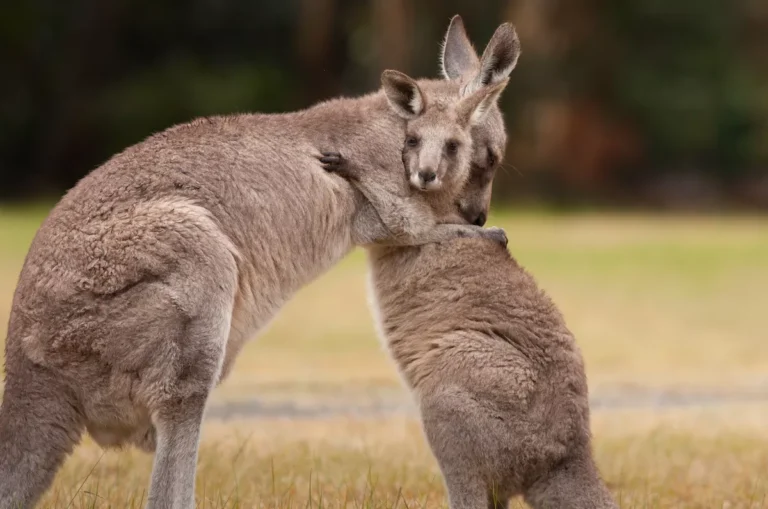
Our Kangaroos Are Not Shoes campaign convinced the top nine global athletic shoe brands, including Nike, Puma, Adidas, and New Balance, to abandon kangaroo leather in soccer cleats. The result: a dramatic blow to the Australian kangaroo skin trade and a watershed moment in aligning wildlife protection values with sourcing and formulation of soccer shoes – essential equipment for more than a billion soccer players in the world.
Promoting and Defending Cage-Free Animal Agriculture
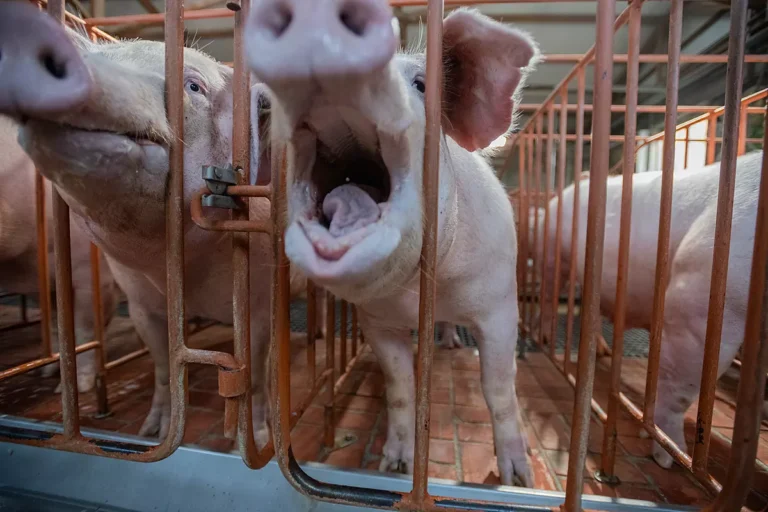
Photo credit: Jo-Anne McArthur/We Animals
Today, nearly half of all laying hens and breeding sows are out of cages and crates, up from just two percent for these female chickens and pigs a generation earlier. Wayne Pacelle, president of the Center for a Humane Economy, was a key primary architect of the farm animal ballot measures and corporate campaigns that produced the shift. Wayne and the Center are working to protect these public and corporate policies from repeal efforts by the National Pork Producers Council (NPPC) and other factory farming interests. NPPC and its surrogates have now lost more than 20 straight federal court cases seeking the overturn of key state farm animal welfare laws, including a victory at the U.S. Supreme Court in NPPC v. Ross upholding California’s Prop 12 as a proper exercise of state authority. We’ve also blocked efforts in Congress to pass the Save Our Bacon Act in the House and the Food Security and Farm Protection Act in the Senate (formerly the EATS Act). The goal, in the end, is to have crate- and cage-free agriculture and end the era of immobilizing animals as a routine animal housing practice.
Crippling the Global Cockfighting Crime Syndicate
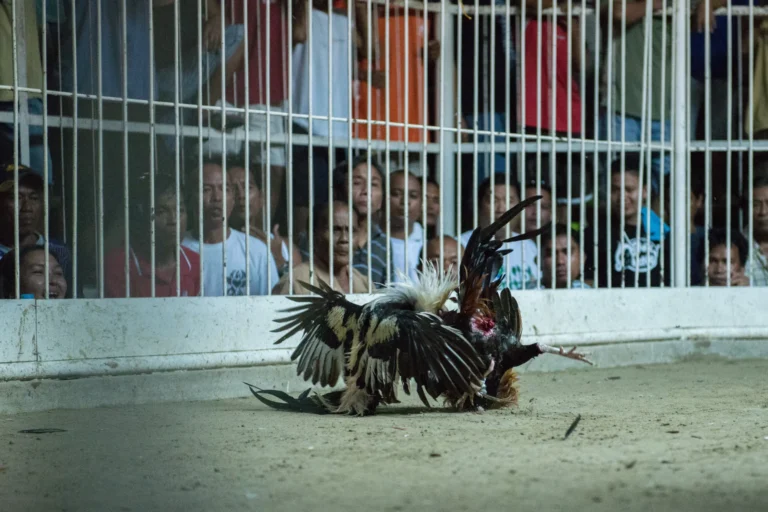
Through our Animal Fighting Is the Pits campaign, affiliates of the Center helped pass the Parity in Animal Cruelty Enforcement (PACE) Act of 2018, outlawing cockfighting in all U.S. jurisdictions — including the U.S. territories. We disrupted a multi-billion-dollar network spanning Puerto Rico to Mexico to Guam to the Philippines, which relied on U.S.-sourced fighting birds. Our legal team has since defended the federal anti-fighting law in six federal court victories, locking in this nationwide prohibition and allowing us and federal law enforcement to zero in on trafficking of fighting birds to more than 30 nations. Our undercover investigators work with law enforcement to break up cockfighting derbies throughout the nation and to trigger arrests of lawmakers involved in this malicious cruelty.
Dismantling the Big Cat Pet Trade
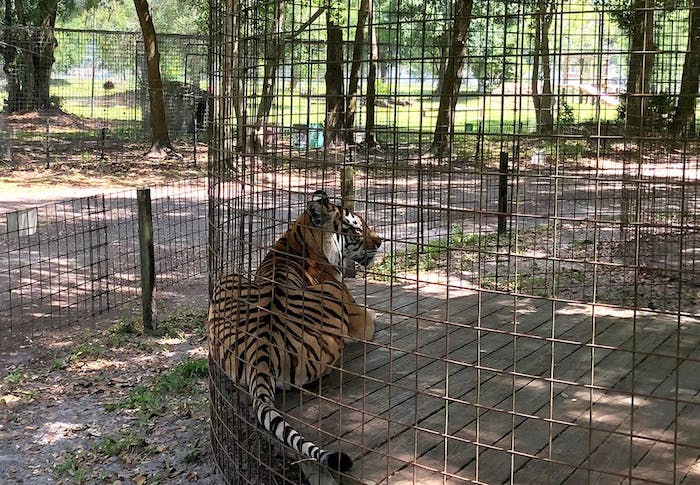
The Center helped pass the Big Cat Public Safety Act in 2022, making it illegal to trade in lions, tigers, and other big cats as pets or to operate cub-petting schemes. Our No Big Cats as Pets campaign, in cooperation with Big Cat Rescue, helped shutter the largest private menageries of big cats, along with incarcerating the big players in the trade such as “Joe Exotic” Maldonado, Jeff Lowe, Tim Stark, and Bhagavan “Doc” Antle. The trade in big cats has been permanently damaged and is a vastly diminished threat to these animals.
Reforming Thoroughbred Racing

Under our Showing Horse Sense campaign, the Center and its sister organization Animal Wellness Action played a key role in the passage of the Horseracing Integrity and Safety Act—creating national standards for drug use and track safety. This forced the horse racing industry to confront its disjointed regulatory structure, to end race-day doping of horses used to enhance performance, and to usher in other meaningful reforms that improve the safety and welfare of racehorses across the country.
Eliminating Greyhound Racing

As the key maneuver in our Ban Greyhound Racing campaign, the Center supported the Florida ballot initiative to ban greyhound racing, closing 12 tracks and collapsing two-thirds of the U.S. industry overnight. From 60 tracks a generation ago, only two remain. The federal Greyhound Protection Act, propelled by the Center and GREY2K USA, will close out this industry altogether, making one of the most tangible examples of a total shutdown of an enterprise that not long ago generated billions in profits from animal competition that turned racing tracks into crash sites.
Ending Horse Slaughter
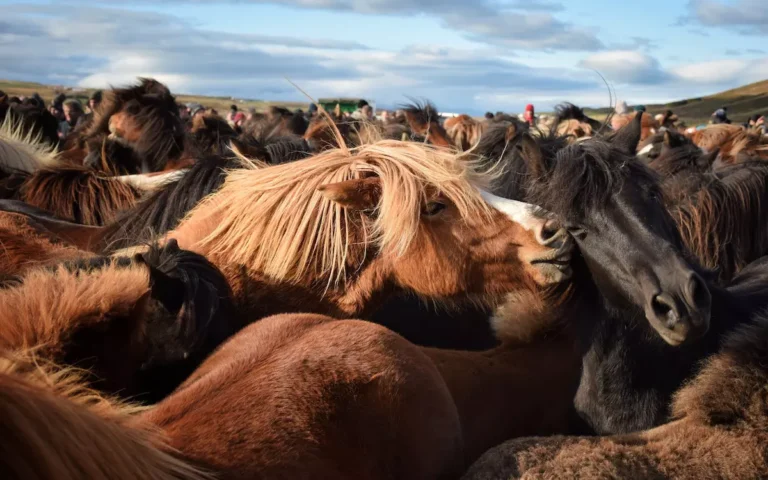
Through our Horses in the Stable, Not on the Table campaign, the Center is pushing to end the slaughter of American horses for human consumption. Annual slaughter numbers have plummeted from 400,000 to roughly 20,000. We are now poised to finish the job — ending live horse exports for slaughter and closing this grim chapter of equine exploitation once and for all.
Breaking the Dairy Monopoly in Public Schools
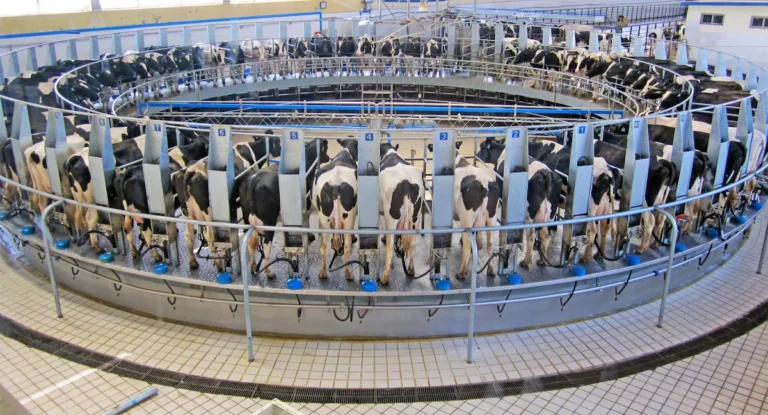
In our Dunking the Milk Mandate campaign, the Center led the congressional campaign to end the 80-year-old cow’s milk mandate in the National School Lunch Program and to bring choice in the form of plant-based milks to kids in schools. With more than one in three kids qualifying for nutrition assistance suffering from lactose intolerance, there is massive milk wastage in the program, with more than 100 million gallons of milk discarded annually by kids who become ill to some degree by drinking the product. Dairy cows have been selectively bred and bioengineered to annually produce six to seven times more milk than they did in decades past, and the milk waste in the schools reflected a gross disregard for the hardships cows endured to produce that milk.
Saving Wolves

In state court in Wisconsin in 2021, we secured a courtroom injunction against wolf killing in the state after it unleashed a horde of hunters that slaughtered over 200 wolves in less than 60 hours. The next year, we helped secure a victory in U.S. District Court in northern California to block the U.S. Fish and Wildlife Service from removing federal Endangered Species Act protections for wolves across the entire country, including in the Upper Great Lakes states where wolves have been at risk from state policies. In 2025, we were one of the parties that secured a ruling from a federal judge that ruled that the Fish and Wildlife Service was wrong not to restore federal protections for wolves in the Northern Rocky Mountains after they sustained appalling, politically driven assaults in those states. We are continuing to work to fend off congressional efforts to remove federal protections for gray wolves across their entire range in the Lower 48 states.
Advancing Other Pathbreaking Campaigns to Build a New, Humane Economy
The Center is also actively working to get the egg industry and the food retail sector to implement ovo-sexing technology in the egg industry—an innovation that can prevent the mass killing of hundreds of millions of male chicks each year through maceration. By promoting scalable solutions, we’re pushing the industry toward a more humane and scientifically advanced production model.
Whether reshaping massive sectors like pharmaceuticals, agriculture, and athletic wear, or eliminating niche markets of cruelty like cockfighting, cub petting, greyhound racing, and horse slaughter, the Center is achieving what few have attempted: embedding animal welfare into the economic DNA of corporate America and beyond. We are working on structural market corrections rooted in ethics, economics, and public accountability.
As the humane economy asserts its own power, its own logic and its essential decency, an older order is passing away, By every measure, life will be better when human satisfaction and need are no longer built upon the foundation of animal cruelty.
— Wayne Pacelle, The Humane Economy: How Innovators and Enlightened Consumers Are Transforming the Lives of Animals