BUsiness of Animal Welfare
A Turning Point: CDC and FDA Set the Stage for Humane, Human-Relevant Research
New policies from the nation’s top public-health agencies mark a decisive break from primate testing and a major advance for modern biomedical science.
By Staff
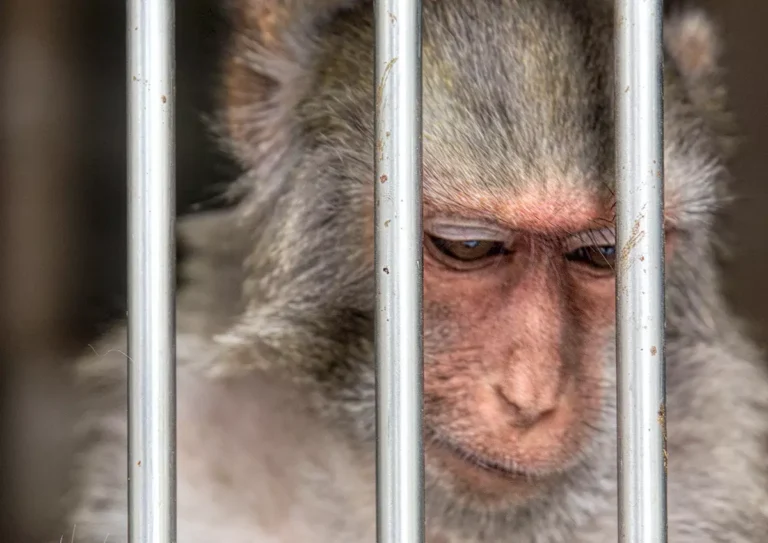
In a landmark move, the U.S. Centers for Disease Control and Prevention (CDC) has signaled it will end its primate research program.
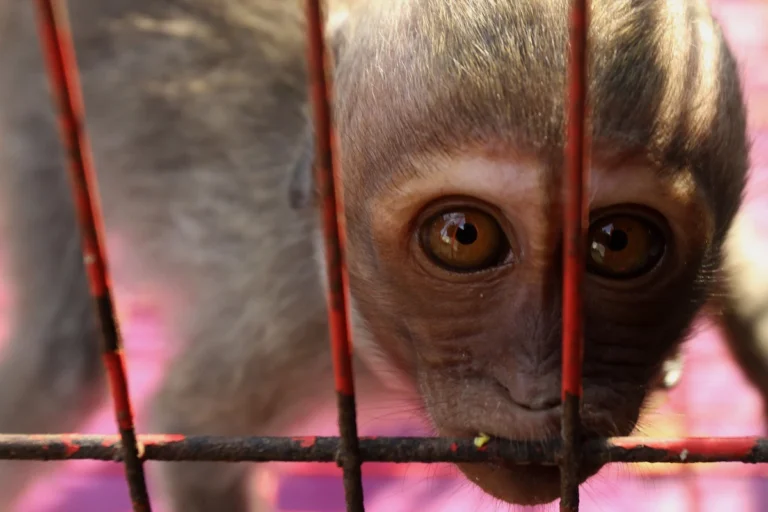
The decision by the nation’s leading health agency signals the winding down of a preclinical research system that has relied heavily on primates, including endangered species like long-tailed macaques. It’s well documented that costly and unreliable primate tests have produced few practical benefits for human health while sidelining other methods that could yield much more meaningful benefits for patients.
The CDC announcement comes amid accelerating federal reforms aimed at transitioning away from animal testing following momentum generated by the FDA Modernization Act 2.0, which the Center for a Humane Economy shepherded to passage in 2022. That bill eliminated an animal testing mandate for all drug development programs—a policy that had been in place for 84 years, until our legislative breakthrough.
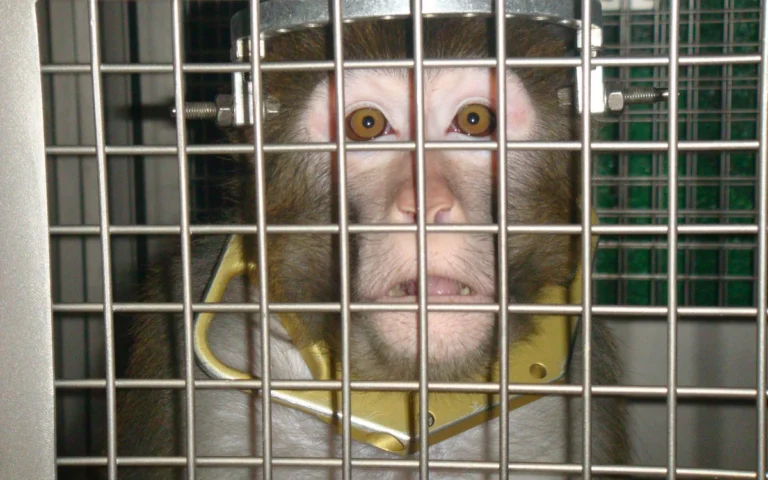
FDA Roadmap Builds on Congress’s Push to Move Beyond Animal Testing
Earlier this year, as a derivative of the congressional action, the FDA released its “Roadmap to Reducing Animal Testing in Preclinical Safety Studies,” committing the agency to replace outdated animal-use requirements with modern, human-relevant technologies.
Building on that commitment, the FDA has now issued a new draft guidance, “Monoclonal Antibodies: Streamlined Nonclinical Safety Studies.” It outlines the specific monoclonal antibody product types for which six-month primate toxicity studies can be reduced or eliminated. The agency emphasized that it is increasingly relying on human-centered tools such as organoids, computational toxicology models, and real-world clinical safety data to inform regulatory decisions.
“We are delivering on our roadmap commitment to eliminate animal testing requirements in drug evaluation and our promise to accelerate cures and meaningful treatments for Americans,” said FDA Commissioner Marty Makary, M.D., M.P.H., in a news release. “Modern science has given us far more effective and humane ways of evaluating drug safety than animal testing. This reform may reduce the amount of time it takes to bring a drug to market and lower research and development costs, which can translate into lower drug prices.”
This latest action, combined with the CDC’s withdrawal from primate research, demonstrates a coordinated federal movement among the major science-based, public health agencies toward human-specific nonclinical tools and away from dependence on primate studies.
Each year, more than 65,000 primates are used in U.S. laboratories and more than 40,000 others are held in breeding or reserve colonies.
The federal withdrawal from primate research occurs against a backdrop of long-standing concerns about scientific reliability, public health protection, and the enormous infrastructure required to maintain thousands of monkeys in research settings. Each year, more than 65,000 primates are used in U.S. laboratories and more than 40,000 others are held in breeding or reserve colonies. Over 51,000 primates fall under NIH-funded programs, including the animals housed at the seven National Primate Research Centers spread across California, Washington, Oregon, Wisconsin, Georgia, Louisiana, and Texas. These centers were created in the 1960s to guarantee a national supply of monkeys for biomedical research. Despite the investment of billions in taxpayer dollars for their use, they have not produced cures for Alzheimer’s disease, Parkinson’s disease, HIV, or other major conditions.
There have also been long-standing concerns about unscrupulous sourcing of primates for U.S. laboratory use. The most heavily traded species used in U.S. labs is the long-tailed macaque—a species listed as endangered by the International Union for Conservation of Nature in 2022 following dramatic population declines.
China, once the dominant exporter, halted shipments of research monkeys in 2020, due to the risk of mutated SARS-CoV-2 transmission. Laboratory-animal importers in the United States then turned to Cambodia, Thailand, and Laos for wild monkeys. Federal investigations have since uncovered extensive smuggling operations in which wild macaques were captured, laundered through fraudulent permits, and shipped into American laboratories with paperwork falsely labeling them as captive bred.
Law enforcement agencies in Southeast Asia have continued to uncover evidence of the illegal wildlife trade. Thai authorities recently intercepted 81 macaques near the Cambodian border. The animals had been packed into net bags alongside methamphetamine, demonstrating the involvement of organized criminal networks. These trafficking pipelines introduce primates that have been exposed to pathogens such as tuberculosis, simian retroviruses, and Herpes B. Workers, transport crews, and surrounding communities face elevated risks when the animals are stressed, immunocompromised, or transported under poor conditions.
Charles River Laboratories, the largest global supplier of research animals, has repeatedly found itself confronting legal and moral problems in its primate work. In 2023, the company disclosed a federal subpoena related to macaque imports from Cambodia, prompting a sharp decline in its stock value. In 2024, Canadian regulators fined a charter carrier for transporting Charles River monkeys without proper permits. Nearly 1,300 macaques worth approximately $27 million were later held in U.S. quarantine amid import irregularities. Although Charles River has highlighted its investments in non-animal methods, the company continues to rely heavily on primate sales and breeding operations. Investors have increasingly questioned the company’s long-term direction as federal agencies accelerate the shift toward modern human-relevant technologies.

Human organ-on-chip system that replace animal testing
As Legacy Players Falter, New Primate-Trade Ventures Draw Scrutiny
Safer Human Medicine, a Massachusetts-based startup working to promote primate use in labs, has also pursued a major expansion of the primate trade. The company has proposed building a vast breeding complex in Bainbridge, Ga., ironically known as Project Liberty. The development is designed to hold as many as 30,000 macaques. Residents, farmers, and public health experts have raised concerns about disease spread, wastewater contamination, environmental impacts, and the use of public incentives to subsidize the project.
The company’s leadership includes figures tied to Envigo, the beagle breeding operation shuttered by the U.S. Department of Justice in 2022 after extensive violations of the Animal Welfare Act. The history of that case, which involved the rescue of 4,000 dogs and a record $35 million financial settlement, has intensified questions about oversight and animal welfare in any future primate operation associated with ex-Envigo operatives.
Primate experiments have consumed enormous resources while delivering very little in terms of medical breakthroughs.
— Tamara Drake, director of research and regulatory policy at the Center for a Humane Economy
“The trajectory is unmistakable,” said Tamara Drake, director of research and regulatory policy at the Center for a Humane Economy. “Primate experiments have consumed enormous resources while delivering very little in terms of medical breakthroughs. At the same time, they have fueled a dangerous and unethical global trade in endangered species. The CDC and FDA actions align with the scientific evidence and with the growing demand for research approaches grounded in human biology.”
One might believe that all of this smuggling and exploitation of endangered species would be motivated by the high value of primates in testing and research. On the contrary, more than 90% of drugs that pass animal tests fail in human clinical trials, which underscores the limited predictive value of primate models for human biology. The FDA and NIH increasingly acknowledge these limitations and are investing in microphysiological systems, human organoids, computational toxicology, and other modern platforms that are based directly on human cells and tissues.
According to Zaher Nahle, Ph.D., M.P.A., senior scientific advisor at the Center for a Humane Economy, the shift represents a palpable maturation of science policy at U.S. health and regulatory agencies.
“The most promising and transformative tools in biomedical research today do not involve animals,” he said. “They involve platforms and systems collectively known as NAMs, including human organ-on-chip systems and advanced AI computational models that can replicate human physiology and better predict drug response across many applications. The CDC decision and new FDA draft guidance reflect a recognition that the path to medical progress lies in modern technologies that are scientifically sound, ethically responsible, and pertinent to patients, first and foremost.”
The end of the CDC’s primate testing program, combined with new FDA guidance on eliminating primate studies for monoclonal antibodies, marks one of the most significant realignments of federal biomedical research policy in decades. The humane economy, once seen as an unattainable alternative model, is now becoming the central model for scientific progress.
FAQ: Understanding the Federal Shift Away From Primate Testing
Why is the CDC ending its primate research program?
The CDC has signaled it will end its primate research program as part of a broader federal shift away from animal-based studies. The program has long relied on primates—including endangered long-tailed macaques—despite producing few meaningful benefits for human health. The agency’s withdrawal reflects growing recognition that primate tests are costly, unreliable, and increasingly unnecessary given modern scientific tools.
What recent actions has the FDA taken to reduce primate testing?
Following congressional momentum from the FDA Modernization Act 2.0, the FDA released its “Roadmap to Reducing Animal Testing in Preclinical Safety Studies,” committing to human-relevant, non-animal technologies. The agency also issued a new draft guidance, “Monoclonal Antibodies: Streamlined Nonclinical Safety Studies,” which allows many six-month primate toxicity studies to be reduced or eliminated. For more background on why monoclonal antibodies are the first major targets for animal-free testing reforms at the FDA, see this explainer from the Center for a Humane Economy.
Why do primate tests often fail to predict human responses?
More than 90% of drugs that pass animal tests—including primate studies—fail in human clinical trials. This failure rate underscores the limited ability of primate biology to model human physiology accurately. Federal agencies now increasingly acknowledge that primate tests are poor predictors of human responses and are turning to tools that rely directly on human cells, tissues, and computational models.
What risks are associated with the international primate trade?
Investigations have uncovered extensive smuggling operations, with wild macaques captured, laundered through fraudulent permits, and shipped into U.S. laboratories as supposedly captive bred. Beyond invalidating scientific studies, this illicit trade increases the risk of introducing dangers pathogens such as tuberculosis, simian retroviruses, and Herpes B into laboratories and communities. The trade also contributes to dramatic population declines in the endangered long-tailed macaque.
What are NAMs (New Approach Methodologies)?
NAMs are modern, human-centered research tools that can replicate key aspects of human biology far more accurately than primate or other animal tests. They include organ-on-chip systems, human organoids, microphysiological systems, and advanced AI computational models. Federal agencies are increasingly investing in these technologies as they offer more predictive, ethical, and efficient pathways to medical progress.
Why are federal agencies shifting toward human-relevant alternatives now?
Federal agencies are moving rapidly toward human-relevant science because several forces have converged at once. The FDA Modernization Act 2.0, enacted in 2022, eliminated the federal mandate that drugs be tested on animals before entering human trials, clearing a major legal barrier that had locked agencies into outdated models for decades. At the same time, the poor predictive performance of primate and other animal tests, escalating public-health risks from global primate trafficking, and major advances in organoids, organ-on-chip systems, computational toxicology, and human clinical data tools have made non-animal approaches both scientifically superior and far safer.
The CDC’s exit from primate testing, combined with the FDA’s new guidance reducing primate requirements, signals one of the most consequential realignments in U.S. biomedical research policy in a generation—reflecting a broad shift toward methods grounded directly in human biology, not animal proxies.
Other Business Posts

Pursuing the End of Primate Testing