
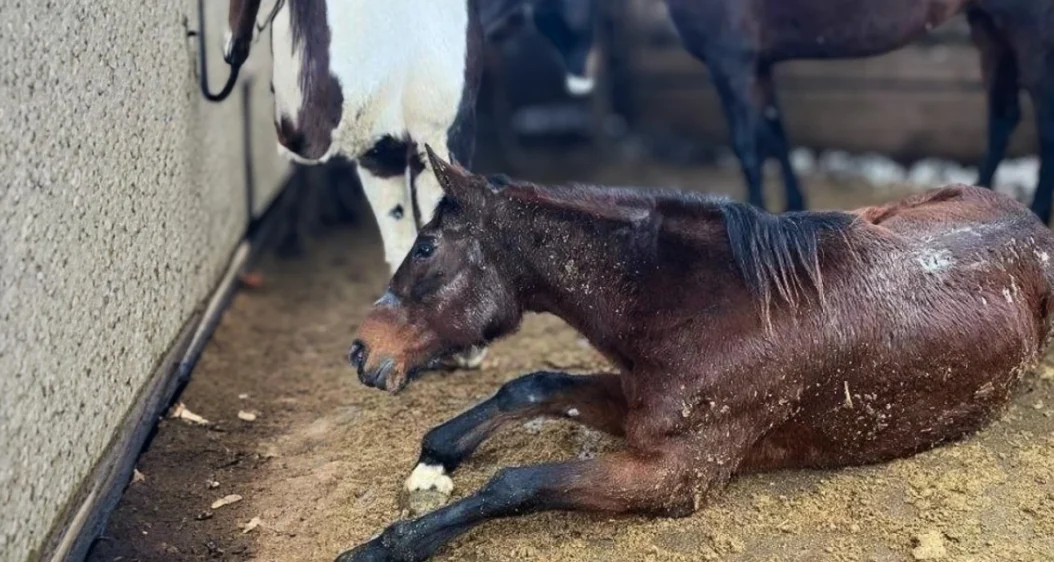
There are big stirrings in our fight to put an end to the despicable and inhumane horse slaughter trade from the U.S. to Canada and Mexico.
For years, we have made the moral case that American horses should not be treated as meat on the hoof — scooped up from their prior owners under some false pretense; trafficked across our southern or northern border; and then, eyes wide with terror, marched onto the slick, bloodied floors of a slaughterhouse to be killed and dismembered, with their parts sold in shrink-wrapped packages to a tiny sliver of high-end consumers in Japan.
But four developments in recent weeks signal even more trouble ahead for unscrupulous horse butchers.
1. A Disease Threat Has Made Animal Trafficking a National Concern
A Reuters investigation has highlighted how long-distance movements of live horses may accelerate the spread of New World screwworm — parasitic flies whose larvae eat the flesh of cattle, horses, and other mammals.
President Trump has temporarily banned shipments of horses for slaughter to Mexico to stem these illegal movements. Yet Texas sheriff’s deputies intercepted a trailer carrying six horses that had illegally crossed the Rio Grande from Mexico, bypassing veterinary inspections, health certifications, and quarantine requirements.
Mexico has reported more than 2,000 equine cases since the current outbreak began in 2024. Researchers quoted by Reuters warn that animal movements can enable the fly to travel much faster than it could move naturally.
And that is precisely why the temporary ban on movement of horses across international borders should be made permanent. Animal Wellness Action organized two letters signed by Republican lawmakers, with more than 20 members of Congress now making that request of the President.
2. New York Showed That Laws Can Make a Difference
This week, local law enforcement in upstate New York, acting on a tip, stopped a transporter near the Canadian border and seized 25 horses allegedly destined for the Viande Richelieu slaughterhouse in Quebec. The transporter was arrested under New York’s 2024 law prohibiting the slaughter of horses and their transportation through the state for slaughter.
This is the first major enforcement action under that law, and it demonstrates something advocates have long understood: when lawmakers give law enforcement the tools to intervene, horses can be saved and the quasi-legal, cross-border shipments of live horses to abattoirs can be stopped.
But one state should not have to shoulder the burden of stopping a trade that crosses state and international borders. We need to apply this ban nationally.
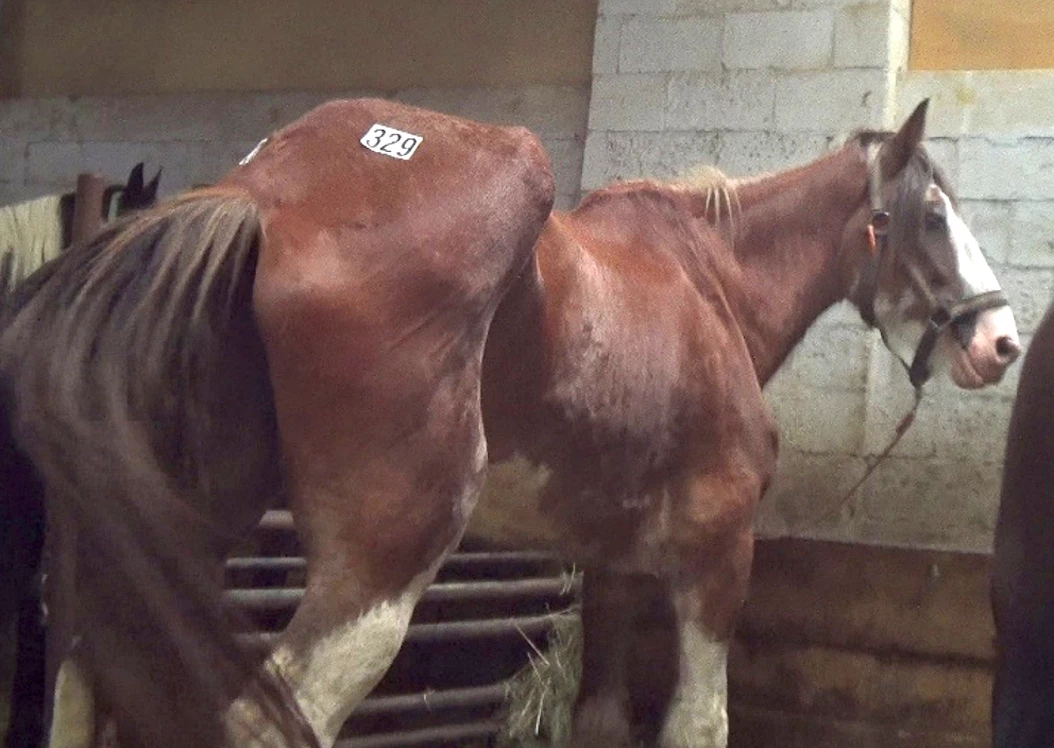 Horses often suffer starvation, injury, and severe abuse on their journey to the slaughterhouse. Congress must act now to end this barbaric trade.
3. Wild Horses Were Found Subject to Being Rounded Up and Shipped to Slaughter
According to a devastating exposé in The New York Times, the federal government is removing thousands of wild horses from public lands every year, and kill buyers are scooping them up and illegally funneling them to slaughter.
The Bureau of Land Management is knowingly allowing kill buyers to acquire them for $25 an animal.
We have a national law to protect these “living symbols of the historic and pioneer spirit of the West” — the Wild, Free-Roaming Horses and Burros Act of 1971 — but the agency charged with its implementation is undermining it in appalling ways.
We tell the public that these animals belong to all Americans. Yet we relentlessly remove them from their homes by means of inhumane and harrowing helicopter roundups and removals. And then we permit a system in which some of them can be reduced to $25 commodities and turned into ground meat.
The American people deserve better service from their government. The rule of law applies to our government as well as to private citizens.
4. Congress Still Has Its Chance to Close the Transportation Pipeline
Congress can enact a permanent horse-slaughter ban in the Farm Bill if that legislation moves forward.
And there is already solid anti-slaughter language moving through the House through a separate legislative vehicle. The Van Drew-Titus amendment to the House Surface Transportation Act would stop the movement of American horses to Canada and Mexico for slaughter. That bill may be taken up in the final month of the year, after the national election in November.
It’s already illegal to slaughter American horses on American soil. It should also be illegal to allow American horses to be slaughtered just over the border. Simple moral and legal consistency is our ask.
This is the moment to demand that your U.S. representative and your two U.S. senators actively support legislation to put a stop to any slaughter of American horses.
Concerns about animal health and agriculture, border security, adherence to the rule of law, and the logical application of anti-cruelty principles give us the grounding we need for conclusive action, so that American horses need not live in fear of abduction and the abattoir.