
KANGAROOS ARE NOT FOOD
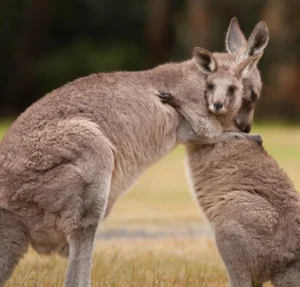
Contaminated bushmeat has no place in our pets' bowls or on restaurant menus. We helped convince the world's largest athletic footwear companies to abandon kangaroo leather. Now we're pressing pet food manufacturers, retailers, restaurants, and distributors to stop buying and selling kangaroo meat.
THE ISSUE
A Troubled Bushmeat Industry with Serious Food-Safety Failures
Every year, approximately 1.3 million to 1.5 million wild adult kangaroos are killed commercially in Australia, with an estimated half-million dependent joeys also killed or left to die. Joeys may be bludgeoned to death or decapitated, while orphaned joeys who escape face starvation, exposure, and predation after their mothers are shot.
Meat from commercially killed adult kangaroos is exported around the world, including to the United States, where it appears in specialty restaurant dishes and pet foods marketed as premium or novel proteins.
Our new report, Australia’s Global Bushmeat Trade, reveals alarming failures throughout the industry’s supply chain.
Government records show that in 2025, a kangaroo meat processor recorded bacterial contamination exceeding the European Union’s unacceptable threshold by more than 10 times. Meat that failed testing was released to export markets anyway.
The report also documents risks from Salmonella, E. coli, parasites, and lead ammunition fragments, as well as a previously underexamined commercial relationship between kangaroo meat suppliers and Australia’s greyhound racing industry.
These findings raise serious questions about the safety, sourcing, and ethics of kangaroo meat products.
THE BUSINESS CASE
An Industry in Decline
Kangaroo meat exports have fallen approximately 86% since their peak in the early 2000s. Australia’s meat exports from the trade generated just $10.9 million (AUD) in 2025.
Meanwhile, the world’s major athletic footwear manufacturers have moved away from kangaroo leather, contributing to a collapse of approximately 98% in skin prices.
This is a diminishing industry with significant animal welfare and food-safety concerns. Companies have little reason to continue sourcing its products when alternatives are readily available.
THE SOLUTION
Take Kangaroo Meat Off the Menu and Out of the Pet Food Aisle
The Center for a Humane Economy is pressing businesses to make three commitments:
- Pet food manufacturers and retailers: Stop using and selling kangaroo meat in food and treats for companion animals.
- Restaurants and foodservice companies: Remove kangaroo meat from menus and purchasing agreements.
- Distributors and importers: End the sourcing and distribution of kangaroo meat products.
Through direct corporate engagement, public education, and consumer advocacy, we intend to build on the success of our Kangaroos Are Not Shoes campaign.
That initiative helped persuade Nike, Adidas, Puma, New Balance, ASICS, and other major footwear manufacturers to reject kangaroo leather.
We demonstrated that corporate decisions can transform an industry. Now we’re applying that proven approach to the kangaroo meat trade.
EXPLORE OUR KANGAROOS ARE NOT SHOES CAMPAIGN
ACTIONS TO TAKE
Ask Companies to Stop Selling Kangaroo Meat
Read and Share Our Investigation
Our nine-month investigation documents the economics, food-safety failures, and animal welfare abuses behind Australia’s commercial kangaroo meat industry.