
Our Latest Investigation Exposes How the Kangaroo Bushmeat Trade Puts People and Pets at Risk
After persuading athletic shoe brands to abandon kangaroo skins, we're taking on the kangaroo meat trade and the industry’s contempt for animal welfare and food safety.
- Wayne Pacelle
Wild kangaroos are shot at night in the Australian Outback, field-dressed in hot, unclean conditions, and later sold across the globe in what can only be called a food safety scandal.
This meat, not inspected by the U.S. Food and Drug Administration upon import, finds its way onto the plates of restaurant patrons and into the food bowls of our canine companions.
Australian government records show that even when the country’s rudimentary domestic food-safety standards are being violated, the contaminated meat is still cleared for export.
That’s among a litany of revelations in a report from the Center for a Humane Economy, “Australia’s Global Bushmeat Trade: A Report on the Commercial Kangaroo Meat Industry: Economics, Food Safety, and Animal Welfare Failures.”
The report is the product of nine months of investigative work by a team of scientists, veterinarians, legal experts, economists, and animal protection advocates. It draws on government documents, scientific studies, industry records, economic data, and firsthand accounts to provide the most comprehensive examination of Australia’s commercial shooting industry that has killed wild kangaroos for the trade in meat and skins.
Contaminated Meat, Exported Anyway
In 2025, kangaroo meat samples from a processing facility approved for export to the European Union repeatedly exceeded established bacterial contamination limits. One sample registered 340,000 colony-forming units (CFU, or live bacteria) per square centimeter — more than 10 times the EU’s threshold for bacterial contamination.
Other meat that failed retesting was downgraded and sold to Australian consumers, including for pet food.
Our investigation also examines scientific evidence of bacterial pathogens, includingSalmonella and dangerous strains of E. coli, along with parasites such as Toxoplasma gondii. Research cited in the report estimates that half of kangaroo carcasses may harbor Salmonella.
Kangaroos are wild animals shot in remote areas, often at night, gutted outdoors in arid or semiarid environments, and tossed into unrefrigerated trucks covered with dust, grime, blood, flies, and other potential sources of contamination. Our report documents sanitation failures throughout the transport and processing of the carcasses.
Add a toxic element on top of the microbial threats: commercial shooters kill kangaroos with lead ammunition, depositing an estimated 1.4 metric tons of lead into Australia’s rangelands every year. The dispersed lead contaminates soil and embeds in the bodies of kangaroos, poisoning scavengers in the wild and then delivering lead loads to pets and people who consume the meat.
There is no workable meat-processing method for extracting lead fragments or dust from cuts of meat sold for pet food, burgers, or steaks.
There is no safe level of lead ingestion, according to the U.S. Centers for Disease Control and Prevention. The non-degradable neurotoxin can damage the brain, nervous system, kidneys, cardiovascular system, and reproductive organs.
Far more pets than people eat kangaroo meat in the United States. Pet owners purchase food and treats for their animals, emboldened by marketing claims that the products are “natural,” “healthy,” and “humanely sourced.” Those hollow assertions echo the industry’s own talking points, with some veterinarians repeating them without any practical understanding of the food safety risks. Contaminated pet food can sicken animals, just as it sickens people.
Australia’s Racing Industry Feeds Kangaroo Bushmeat to Greyhounds
Our investigation also uncovered a previously underexamined commercial relationship between Australia’s kangaroo meat industry and a different enterprise known to foster animal harm: greyhound racing.
With overseas demand for kangaroo meat waning because of the keener understanding of the moral and food-safety threats posed by kangaroo bushmeat, the industry has found a major purchaser in the form of the Australian greyhound industry.
One of the central figures connecting these industries is Ray Borda, the managing director of Macro Group Australia, the country’s largest kangaroo meat exporter. Borda is also a longtime greyhound owner and breeder in the racing business.
This presents a double-barreled problem for animals. An industry that kills wild kangaroos by the millions is finding an outlet for its products in a different industry that exploits dogs for gambling and entertainment.
And given the scale of these sales, the greyhound racing industry is literally keeping the kangaroo-shooting industry afloat. Take away these purchases and the nighttime shooting sprees cannot make ends meet. That’s just one more very compelling reason to shut down the dog kennels and the racing schedules, already stigmatized by reports of dogs being baited with live animals during training in Australia and greyhounds being injured or killed in competition on racetracks.
A Withering Industry, Diminishing Foreign Markets
In 2025, Australia’s kangaroo meat exports amounted to a mere $10.9 million in gross sales from Australia to the Americas — an almost unmeasurable (0.014%) share of agricultural commerce. Talk about a nothing-burger in terms of job creation and economic impact.
Kangaroo bushmeat export volumes have collapsed by approximately 86% since their peak in the early 2000s.
Russia, once the largest foreign market for kangaroo meat, banned imports in 2009 following bacterial contamination concerns. China has resisted efforts to open its market, citing animal welfare issues.
China and Russia are not often heralded as animal-welfare leaders, so when these governments deny imports based on animal-welfare and food-safety concerns, you know something is inherently wrong with this wildlife-killing enterprise.
Our investigation finds that Belgians — who for years kept alive the North American horse slaughter trade with their purchases — are also now providing an export lifeline to kangaroo killers. The Belgians account for more than 30% of kangaroo meat imports.
Last month, a small restaurant in northern California, supplied by the food distribution giant Sysco, served kangaroo burgers on its menu for a special burger night. Thanks to the reporting of the Lost Coast Outpost, it didn’t take long for us to point out that the sale of any kangaroo parts, including meat slabs, is illegal in California. Our federal Kangaroo Protection Act, H.R. 1992 and S. 2162, seeks to extend California’s policy to the nation.
From “Kangaroos Are Not Shoes” to “Kangaroos Are Not Food”
Several years ago, the Center for a Humane Economy launched Kangaroos Are Not Shoes, calling on the global athletic footwear companies to step away from sourcing the skins of wild kangaroos for the uppers in soccer cleats. Nike, Adidas, Puma, New Balance, ASICS, and other major manufacturers ended or committed to ending the use of kangaroo leather in their athletic footwear.
According to government advisory records cited in our new report, kangaroo skin prices have fallen from approximately $18.50 per skin in 2010 to less than 25 cents today — a decline of roughly 98%.
Other fabrics became the base materials for shoes that performed splendidly on the pitch. Just as soccer players didn’t complain about shoe performance after the companies swapped in new materials for kangaroo skins, no consumer nor any pet will go without when kangaroo meat goes away. No one has ever uttered the phrase “that kangaroo burger was the best one I’ve ever had.” Kangaroo meat, at best, is a curiosity, not a guilty pleasure
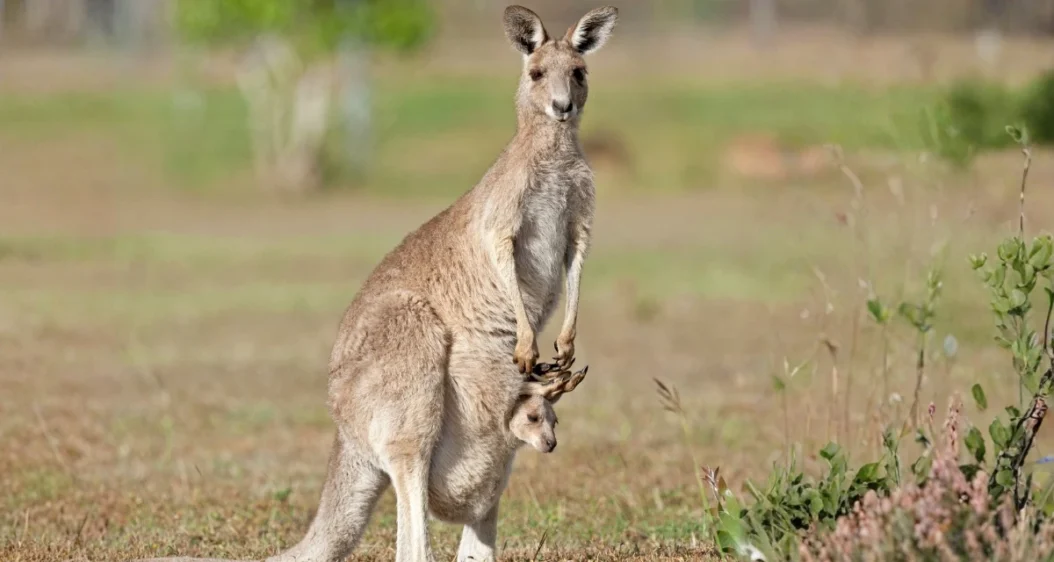
It’s this trickle of trade on the global stage that still drives a gusher of slaughter of wild kangaroos. Even to satisfy these commercially insignificant trade levels, more than a million kangaroos must be slain. Shooters kill these animals at night, separating mothers from their dependent joeys. Young kangaroos are bludgeoned while others perish from exposure, starvation, or predation after their mothers have been shot.
It’s time for the U.S. Food and Drug Administration to act on the evidence presented in our report and determine that kangaroo meat is unfit for sale, whether intended for human consumption or pet food.
We are also urging regulatory authorities in Canada and the European Union to undertake similar action. Belgium should end its imports, and Vietnam should pull back from its recent agreement with Australia to import kangaroo meat. No country should feed its people meats laden with pathogens and lead.
Do we even need to make an argument that the food industry can do better than traffic in kangaroo bushmeat? The food-safety and ethical concerns about nighttime massacres of these iconic marsupials should provide more than sufficient reason to stop this moral and food-safety hash.
Wayne Pacelle, president of the Center for a Humane Economy and Animal Wellness Action, is the author of two New York Times bestselling books, “The Bond” and “The Humane Economy.”
Dear reader: If you support substantive policy work to protect animals, please consider donating to the Center for a Humane Economy today. You can give any amount one time, or make it a monthly gift, as many of our supporters do. Thank you for helping us fight for all animals.