
Anti-Democratic Agriculture Committee Boss Blocks Consideration of Four Pro-Animal Amendments to House Farm Bill
Agriculture Committee head also tried (but failed) to gut the greyhound racing ban. The U.S. Senate can correct outcomes at odds with American values
- Wayne Pacelle
I’m still in southern Wisconsin, where the community is abuzz with excitement about the accord I announced yesterday between the Center for a Humane Economy, Big Dog Ranch Rescue, and Ridglan Farms to obtain 1,500 dogs from the laboratory breeding and contract testing company headquartered nearby. And that event came just a day after our announcement that Korean Air will halt shipping roosters, used in cockfights, to the Philippines — one of the two biggest consumers of U.S.-reared fighting birds in the world.
During this same consequential week, and after a stop and restart, the U.S. House of Representatives took up the Farm Bill — better described as the “Factory Farm Bill” — with much at stake for animals.
The American public cares deeply about animal well-being, as evinced by the outpouring of concern for the beagles at Ridglan. And when the full House is allowed to cast an up-or-down vote on an animal protection policy issue, we typically prevail. That was evident this week when the House rejected the anti-animal amendment, from Rep. Riley Moore, R-W.Va., to exempt West Virginia from the national ban on greyhound racing, defeating it 178–237.
That vote was instructive.
With our partners at GREY2K USA, and with Rep. Salud Carbajal, D-Calif., fighting to protect the Greyhound Protection Act provision he inserted into the Farm Bill during Agriculture Committee consideration of the bill in February, we prevailed on the attempt to hollow out the national ban on dog racing. Yesterday, when the Moore amendment came up on the House floor, we won the “Nay” votes of nearly all Democrats and 28 Republicans to defeat Rep. Moore’s amendment to create a greyhound racing enclave in the Mountaineer State.
Our ability to deliver the votes is precisely why House leadership blocked votes on on other animal welfare policies in the Factory Farm Bill. Had we been granted votes on farm animal welfare, horse slaughter, mink farming, and animal fighting, we would have prevailed on every one of them.
Taking its cue from House Agriculture Committee Chairman Glenn Thompson, R-Pa., the small and highly bipartisan House Rules Committee blocked four GOP-led amendments on animal welfare that were headed to passage, including the Luna-Costa-Garbarino amendment to stop Congress from nullifying two state laws to combat extreme and inhumane confinement of breeding pigs.
The Agriculture Committee Republican boss and the Rules Committee should not be allowed to wipe out the votes of 10 million American citizens favoring these measures. And not only that, these GOP lawmakers don’t even want to give the U.S. House a chance to exert its will on the issue. Thompson is beholden to domestic agribusiness interests and to foreign interests, including China’s Smithfield Foods, and is prepared to dismiss the actions of Americans who participated in statewide elections. If you want to look at what Big Agriculture’s foreign influence looks like in the American political system, this is it.
The Factory Farm Bill ultimately passed 224-200, but under a process that denied members the opportunity to vote on widely supported, bipartisan animal welfare reforms. Even so, there is daylight on every one of these issues as we turn to the Senate, which may soon take up the Farm Bill, and where we have strong leaders on our issues.
Confinement of Sows in Immobilizing Gestation Crates
The Luna–Costa–Garbarino amendment #28 would have struck the Save Our Bacon (SOB) Act, inserted into the Factory Farm Bill to overturn California’s Proposition 12 and Massachusetts’ Question 3. Those measures, approved by more than 10 million voters, prohibit the extreme confinement of breeding sows in immobilizing gestation crates and establish sales standards for pork. (Read our report on the SOB Act here.)
These laws are pro-farmer and do not bear any resemblance to the disparaging descriptions of them by an Agriculture Committee chairman who has proved time and again that he does not know even the basics of how pigs are housed. Pig farmers already have the capacity to meet demand in states like California and Massachusetts using existing group housing systems, and about 45% of sows are already raised outside gestation crates. This transition has been underway for decades.
The SOB Act is an attempt to nullify democratic decisions and undermine state authority, while advancing the interests of large-scale agribusiness, including the Chinese-owned company that already controls a quarter of our domestic pig production in the United States. A conservative Supreme Court has already upheld these laws as constitutional. Thompson blocked a vote on the bill because he knew the full House was going to toss out the overreaching, anti-democratic SOB Act, which he wrote into the Factory Farm Bill months ago.
Halting the Slaughter of American Equines for Human Consumption
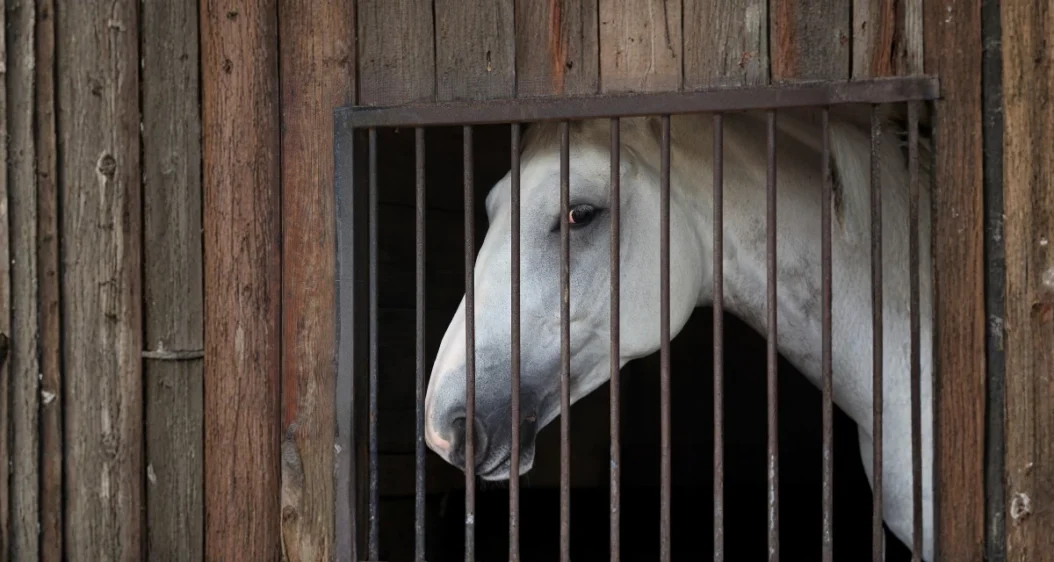
The Buchanan–Schakowsky amendment #24 would have ended the export of American horses to Canada and Mexico for slaughter and reinforced the domestic ban on horse slaughter. The two veteran lawmakers, both retiring, had a majority of the House on their bill going into floor consideration, so the outcome of that amendment was preordained.
The horse slaughter industry has been steadily collapsing. The number of American horses shipped for slaughter has dropped from hundreds of thousands annually decades ago to roughly 25,000 today, most of them going to Mexico, with the meat exported to accommodate a tiny sliver of consumers in Japan. That decline in horse slaughter reflects cratering demand for horse meat anywhere in the world, as well as American disgust with the idea of betraying the 250-year-old bond between Americans and the horses who helped us expand and settle the nation.
What remains of this predatory horse-meat trade is a formula for cruelty — long-distance transport in crowded conditions, injuries left untreated, and exposure to extreme temperatures. Horses that have served people for generations are funneled into a system that treats them as disposable commodities.
There is no justification for maintaining this pipeline, but Thompson blocked a fair vote to keep this appalling trade in equines limping along.
Ending Lucrative, Illicit Commerce in Fighting Animals
The Nehls-Troy Carter amendment #22 would have strengthened enforcement against dogfighting and cockfighting, building on the bipartisan FIGHT Act and the similarly broadly supported No Flight, No Fight Act.
It would have closed key enforcement gaps by stopping the shipment of fighting birds through the U.S. Postal Service and commercial airlines, while preserving legitimate agricultural transport. Just this week, as a testament to the effect of this amendment, Korean Air announced, as I mentioned above, that it would halt shipping roosters in its cargo holds to the Philippines. The Nehls amendment also would have enabled law enforcement to seize property used in animal fighting operations after conviction.
Animal fighting is tied to organized crime, illegal gambling, narcotics trafficking, weapons offenses, and the spread of avian diseases that threaten U.S. agriculture and consumer prices. Tens of thousands of fighting birds are trafficked each year through sophisticated networks.
Our partners on the core provisions of the anti-animal-fighting legislation are National Sheriffs’ Association, Rose Acre Farms, and more than 1,100 other endorsers in law enforcement, agriculture, gaming, and animal welfare backing these key reforms. What kind of person defends the sickening cruelty of animal fighting? Sheriffs and district attorneys from every one of G.T. Thompson’s counties in his district publicly endorsed many of these anti-animal-fighting policies — underscoring that the people back home don’t much agree with his view that animals should continue to absorb punishment from people involved in organized crime in America and among the riffraff they trade with in Mexico and the Philippines.
Preventing the Revival of Multimillion Dollar Subsidies to the Mink Industry
The Fitzpatrick–DeLauro amendment #39 would have removed language restoring federal taxpayer support to the mink fur industry, preserving a longstanding prohibition on using federal funds to promote marketing of mink pelts.
The mink industry is in steep decline, with roughly 50 farms remaining and minimal domestic demand. Nearly all pelts are exported to luxury markets abroad, including China. Reviving subsidies would mean asking American taxpayers to fork over millions of their hard-earned dollars — at a time when our national debt is $39 trillion — to support a shrinking industry that overwhelmingly serves foreign consumers.
At the same time, mink farms pose well-documented public health risks. These animals are highly susceptible to and capable of amplifying dangerous influenza strains, creating the potential for spillover events that threaten both human and animal health.
Congress put the kibosh on these subsidies 30 years ago. There is no sound policy rationale for burning up tax dollars on foreign fashion shows in China, allowing that country to outsource viral threats from mink farms to our homeland. The votes were there to strip this provision, but the House was not allowed to weigh in.
A Factory Farm Bill for Foreign Interests — and a Clear Path Ahead
The Factory Farm Bill as advanced in the House reflects a closed process and a set of priorities that elevate industrial agriculture and, in some cases, foreign-controlled interests over animal welfare and the will of American voters.
Now the focus shifts to the Senate, where there is strong bipartisan support for cracking down on animal fighting, for ending the horse slaughter pipeline, and for defending state animal welfare laws like Proposition 12.
We move forward with momentum — from the defeat of the greyhound carve-out, to the new policy from Korean Air to stop commercial air transport of fighting animals, to the agreement to release 1,500 dogs from a laboratory system. The public, and even private corporations that were part of the problem, see that it’s time to better align with bedrock animal protection values.
The path to progress on the biggest animal protection issues is never linear, nor is it unobstructed. Special interests, including powerful foreign actors working to corrupt our political system, will do all they can to keep systems of animal exploitation in place. But I promise you we can prevail if we have the funding and constituent engagement to demand outcomes that make sense for American taxpayers and that align with the values of the vast majority of Americans.
Dear reader: If you support substantive policy work to protect animals, please consider donating to the Center for a Humane Economy today. You can give any amount one time, or make it a monthly gift, as many of our supporters do. Thank you for helping us fight for all animals.