


Historic move by one of the seven federally funded primate research centers could stir NIH to expand this kind of shift in research and animal care
BEAVERTON, Ore.— Animal Wellness Action and the Center for a Humane Economy today applauded a unanimous vote by the Oregon Health & Science University (OHSU) Board of Directors calling for a major overhaul of the Oregon National Primate Research Center (ONPRC), including a substantial reduction in its colony of approximately 4,500 nonhuman primates and a shift toward animal-free new approach methodologies, or NAMs.
The Board directed OHSU leadership to develop a plan to transition ONPRC toward becoming a national center of excellence for NAMs while reducing the number of primates held at the facility. It directed OHSU to stop supplying primates to laboratories and other outside institutions, reduce breeding, and consider opportunities to move animals to sanctuaries.
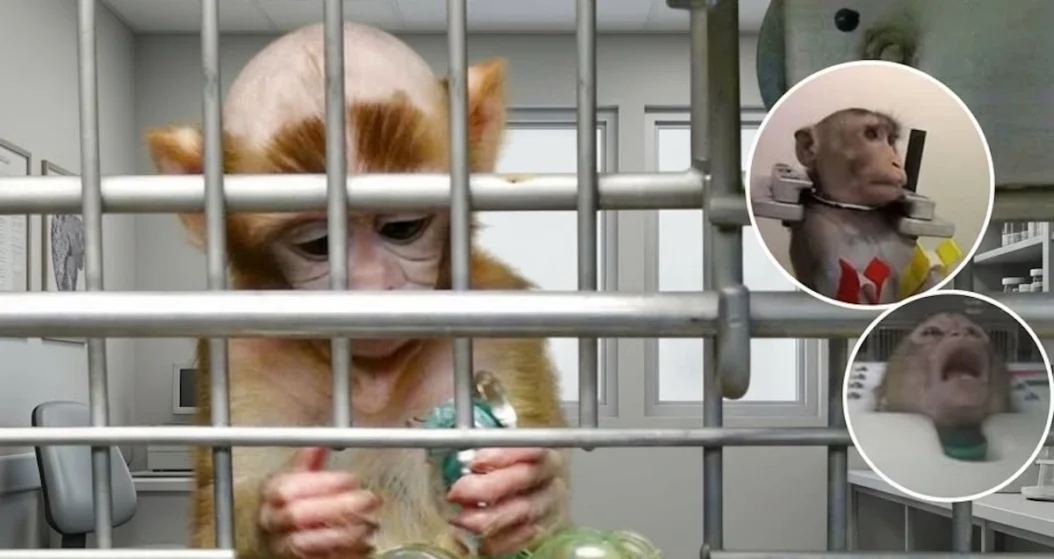
The decision represents a dramatic change in direction for a facility that has operated for more than six decades as one of seven National Primate Research Centers (NPRCs) supported by the National Institutes of Health (NIH). OHSU acknowledged that the decision could result in ONPRC no longer operating as part of the federal NPRC system.
“This is a watershed moment in the long-running debate over the future of primate experimentation in the United States,” said Wayne Pacelle, president of Animal Wellness Action and the Center for a Humane Economy. “One of the nation’s flagship primate research centers is acknowledging that the future of biomedical research lies in more human-relevant science, not in endlessly breeding and tormenting thousands of monkeys for medically suspect outcomes.”
Earlier this year, OHSU entered negotiations with NIH over the possible conversion of the Oregon center into a primate sanctuary after NIH approached the university about the concept. Those discussions did not produce an agreement for a full sanctuary conversion, with OHSU citing the enormous financial costs associated with maintaining and caring for thousands of primates.
The organizations said the new plan nevertheless represents a significant retreat from the traditional National Primate Research Center model.
“This decision reflects an important scientific reality: the future of biomedical research must be increasingly grounded in human biology,” said Dr. Zaher Nahle, senior scientific advisor for the Center for a Humane Economy. “Human organoids, organs-on-chips, advanced computational models, and other New Approach Methodologies are giving researchers increasingly sophisticated tools to study human disease and drug response directly. Redirecting scientific expertise and resources from maintaining large primate colonies toward developing and validating these human-relevant approaches is not simply an animal-welfare objective—it is an opportunity to improve the science and ultimately deliver better results for patients.”
“This decision should ‘step one’ in a series of actions to revamp the entire NIH primate research system,” said Tamara Drake, director of research and regulatory policy for the Center for a Humane Economy. “For decades, the federal government has invested heavily in maintaining large primate colonies and the infrastructure needed to sustain them. Now one of the seven federally supported institutions is planning to reduce its colony and make NAMs a central part of its scientific future. NIH should seize this moment to accelerate that transition nationally.”
The decision comes amid a broader federal movement toward human-relevant research. NIH has announced policies to prioritize human-based research approaches and reduce reliance on animals, while the U.S. Food and Drug Administration (FDA) has undertaken major initiatives to expand the use of NAMs in drug development.
The organizations cautioned, however, that OHSU’s resolution does not yet establish a numerical target or firm timetable for reducing the primate population.
“A commitment to a substantial reduction is important, but the next step must be putting numbers and dates behind that commitment,” Drake said. “OHSU should establish clear targets for reducing breeding and the overall colony, identify animals who can be moved to accredited sanctuaries, and establish measurable benchmarks for replacing primate experiments with human-relevant methods.”
The seven National Primate Research Center operations maintain large breeding colonies and specialized infrastructure supported by federal funding. But late last year, a bipartisan group of 20 members of the U.S. House of Representatives sent a letter to NIH Director Jay Bhattacharya urging his agency to reassess its funding levels for NPRCs. The members of Congress noted that “[b]y ramping down spending on NPRCs, the NIH can generate savings that can be invested in research that utilizes animal-free NAMs while improving human health.”
Last week, the U.S. House unanimously passed the FDA Modernization Act 3.0, following similar action by the U.S. Senate last December. That legislation builds on the FDA Modernization Act 2.0, which Animal Wellness Action and the Center for a Humane Economy shepherded to passage in 2022 to eliminate an 84-year-old animal testing mandate for experimental drugs.
“The Congress is signaling it wants systemic changes when it comes to the use of primates, dogs, and cats in research and testing,” Pacelle said. “Winding down animal use in testing and experimentation will yield superior scientific and public health outcomes and it will spare millions of animals anguish and suffering.”