
Roadless Rollback Unleashes Poachers, Bulldozers in a Third of National Forests
The administration’s plan to dismantle one of America’s most important forest protections would open millions of acres of wildlife habitat to roads, logging, poachers, and other threats.
- Wayne Pacelle
I’ve been quick to applaud the Trump administration when it has done good work, including on reducing animal testing and experimentation at the FDA, NIH, CDC, and EPA. While there’s much more to do on this front to accelerate the transition away from the use of beagles, primates, and other animals and toward 21st-century, animal-free science, the progress has been consequential and, in many ways, historic.
We’ve not hesitated, however, to call out the Interior Department for taking actions like these to harm animals:
- Promoting the mass killing of half a million federally protected North American barred owls and spending $1.35 billion on the unworkable scheme. I’ve written about it here.
- Redefining “harm” under the Endangered Species Act to allow the destruction of habitats that endangered and threatened species call home, including the old-growth forests of the Pacific Northwest that provide critical nesting sites for Northern spotted owls. My prior thoughts can be read here.
- Restoring baiting of grizzly bears and black bears on national wildlife refuges in Alaska. See my past blog here.
- Spending millions of your tax dollars to round up federally protected wild horses and burros and allow their sale to kill buyers who illegally funnel them to kill pens and slaughter plants in Canada and Mexico.
- Opening more national wildlife refuges in the United States to sport hunting, while also repealing lead ammunition phase-outs on the few national wildlife refuges that limit dispersing toxic lead on lands originally set aside to provide safe places for wildlife. More on that here.
For successive administrations, the USDA has worked at cross-purposes with animal welfare, and the current USDA is no different.
It’s been leading the fight in the federal courts to try to federally preempt the states’ most important farm animal protection laws, including in California (Prop 12), Massachusetts (Question 3), Michigan, and other states. This work is not only an assault on animal welfare, but also an attack on thousands of family farmers who have invested billions in more humane housing systems and face bankruptcy if markets for their products are badly disrupted. Farmers need certainty, and they have it now in these important state policies.
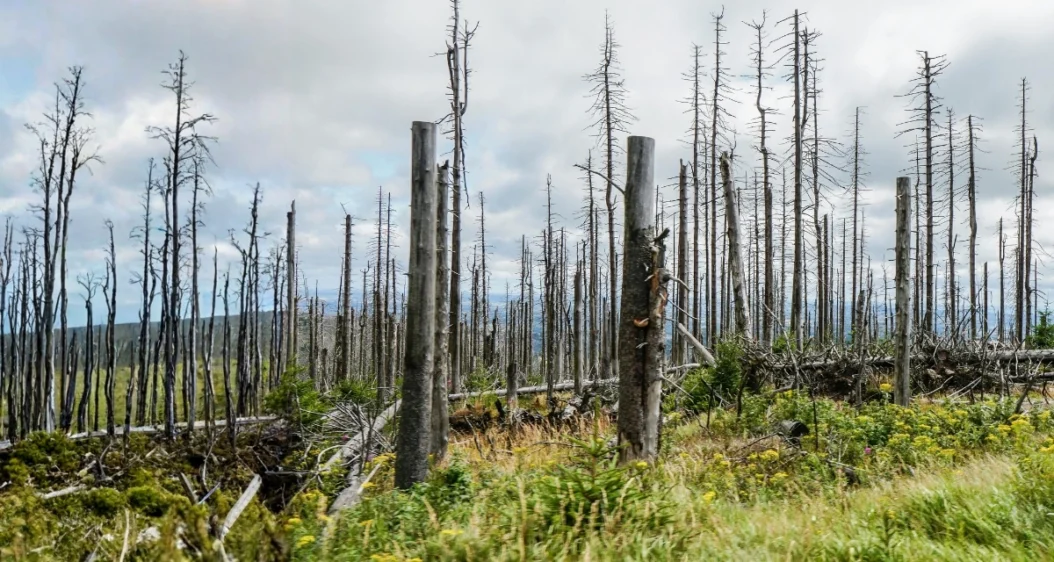
But surely one of the worst new policies is the repeal of the so-called Roadless Rule to allow for road building on a third of our national forests. New roads on these public lands will allow access to sensitive landscapes by poachers, bear baiters, and other trophy hunters, barred owl shooters, and timber companies and their bulldozers.
Award-winning nature writer Ted Williams, a lifelong sportsman, has done detailed reporting on this dramatic turn in the road and its costs to wildlife. Below, I’ve included a few paragraphs from his must-read piece, along with a link to the complete story.
We’ll be joining other organizations to block this bulldozer invasion of our public lands, along with a raft of other anti-animal policies advanced by federal agencies.
An excerpt from “The Trump Administration Moves to Rescind the Roadless Rule,” by Ted Williams. Read the entire story here.
On Aug. 18, Agriculture Secretary Brooke Rollins announced that the Trump administration has filed a proposed rule to rescind in its entirety the national 2001 Roadless Area Conservation Rule that provides protection for 58.5 million acres of roadless areas, only 30.3% of the 193 million acres managed by the U.S. Forest Service.
“Our forests can’t afford another decade of inaction,” proclaimed Rollins. “For too long, outdated restrictions have kept tens of millions of forested acres off-limits to the very treatments that improve forest health and reduce wildfire risk to our communities. Today, we filed a proposal to restore authority to local forest managers who know the land best, removing the barriers that have kept them from doing the work the land demands. It’s time to turn the page on the failed Roadless Rule and return our forests to health and productivity.”
And Deputy Secretary Stephen A. Vaden weighed in with this: “[It’s] commonsense policy sought since the first Trump administration … It is a credit to President Trump.”
Wildlife advocates, economists, watchdog groups, scientists, and independent foresters are outraged. Wayne Pacelle, president and founder of Animal Wellness Action and the Center for a Humane Economy: “The Roadless Rule, in place for a quarter century, is one of the most important federal policies to benefit wildlife and intact habitats. Maintaining just a portion of our national forests as roadless keeps out poachers and also allows these natural systems to maintain surface water purity and to reduce carbon loads in the atmosphere.”
Drew Caputo, a senior attorney with the environmental group, Earthjustice: “The Roadless Rule protects some of the most valuable public lands that belong to all Americans. It is the most important land protection measure of the last 60 years.” And Steve Ellis, president of the nonpartisan watchdog group Taxpayers for Common Sense: “Before the Roadless Rule, we would build roads into areas, and we would have money-losing timber sales that would cost taxpayers billions of dollars.” …
In the Aug. 20 Federal Register, the Trump administration announced a public comment period for its proposed Roadless Rule rescission and accompanying Draft Environmental Impact Statement. The comment period will run from Aug. 20 through Sept. 21. Comments can be filed online via Regulations.gov and the USDA Forest Service Roadless Areas Page.
What do American citizens think about abolishing the Roadless Rule? The answer is evident in the 183,000 public comments filed with the Trump administration last September, of which 99% were opposed. The Administrative Procedure Act requires federal agencies to consider public commentary and provide a rational, evidence-based explanation for their final rule, a directive the Trump administration routinely ignores. For example, on July 14, 2026, it finalized a rule that basically repeals the Endangered Species Act. While the administration refuses to list the number or percentage of negative responses, random sampling by policy analysts at Earthjustice and independent data scientists reveals that about 99% of the 357,000 public comments were opposed. …
Wayne Pacelle, president of the Center for a Humane Economy and Animal Wellness Action, is the author of two New York Times bestselling books, “The Bond” and “The Humane Economy.”
Dear reader: If you support substantive policy work to protect animals, please consider donating to the Center for a Humane Economy today. You can give any amount one time, or make it a monthly gift, as many of our supporters do. Thank you for helping us fight for all animals.