


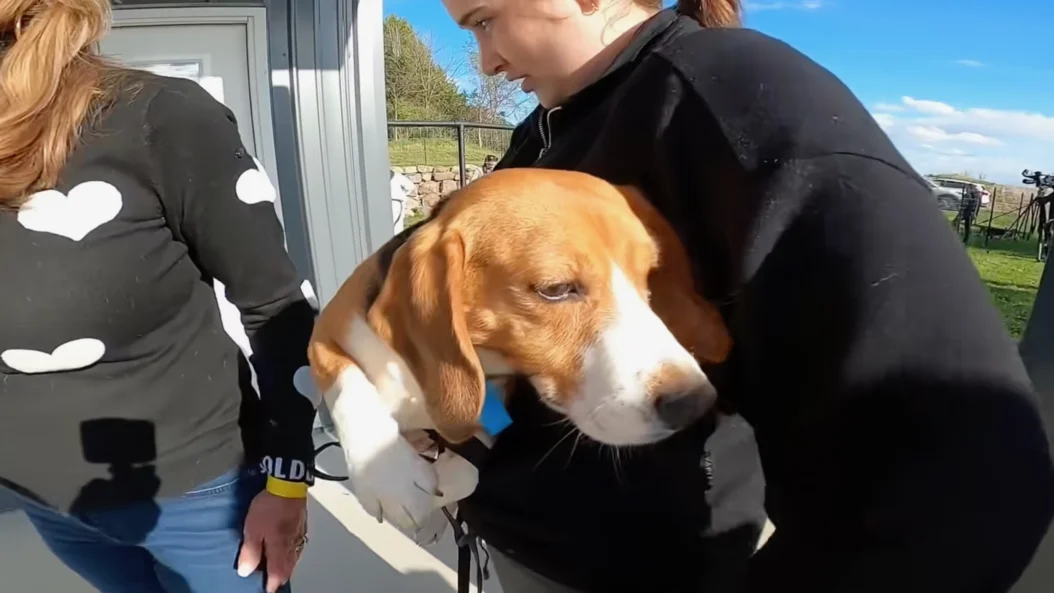
BLUE MOUNDS, Wis. — The Center for a Humane Economy announced today that another 135 beagles will be removed this week from Ridglan Farms, the Wisconsin facility that for decades bred dogs for research and testing. The transfer is part of the broader effort launched earlier this year through a confidential accord involving the Center for a Humane Economy, Big Dog Ranch Rescue, and Ridglan Farms that has already resulted in the removal of more than 1,500 beagles from the facility. Of the dogs being transferred this week, 68 will be taken into the care of the Center for a Humane Economy and its rescue partners, while 67 will be transferred to Big Dog Ranch Rescue.
The midweek transfer operation marks the latest phase of an exciting, heartwarming effort to move dogs out of the laboratory supply pipeline and into the care of rescue organizations, shelters, foster homes, and ultimately permanent adoptive families.
“These beagles were born into a system that bred them for a range of invasive tests in laboratories,” said Wayne Pacelle, president of the Center for a Humane Economy, “but by the end of this week, 1,635 dogs born at a laboratory-animal supplier will have their lives dramatically transformed for the better.”
The plight of the Ridglan dogs has stirred lawmakers to act with intentionality to halt all taxpayer-funded experiments on dogs and cats with several lawmakers leading the charge on this front.
“It’s wonderful news that another 135 beagles are being released from Ridglan Farms,” said Congressman Nick Langworthy, R-N.Y. “While animal welfare organizations continue their fantastic rescue efforts, I’m proud to lead a bipartisan effort to shut off the funding spigot that is allowing these breeding for experimentation facilities to operate. Not a single taxpayer dime should be spent on the painful experimentation of dogs and cats, and it’s time for government policy to catch up to the modern advancements that are producing far more effective health outcomes.”
“Thank you to all of the many groups involved for helping rehome all these dogs. It’s great that another 135 dogs will be leaving Ridglan Farms this week. I won’t rest until we know every dog is out of there and in a safe and loving home,” said Congressman Mark Pocan, D-Wis.
Federal momentum toward reducing and replacing animal testing has accelerated in recent years, shrinking demand for dogs from Ridglan and other laboratory-animal suppliers and signaling a bigger change ahead. Congress approved FDA Modernization Act 2.0 in 2022, removing an outdated federal requirement for the use of dogs and other animals in experimental drug screening. Last month, the House Energy and Commerce Committee unanimously voted to advance the FDA Modernization Act 3.0 to further align federal regulations with the reforms established in federal statute. The Senate approved the legislation, S. 355, by unanimous consent in December.
The Center for a Humane Economy, Big Dog Ranch Rescue, Beagle Freedom Project, Dane County Humane Society, Wisconsin Puppy Mill Project, and Wisconsin Federated Humane Societies continue coordinating veterinary care, transportation, socialization, fostering, and adoption services for the dogs. The operation has also intensified calls for stronger federal oversight of laboratory animal breeders licensed by the USDA.
More than 90% of drugs that appear promising in animal tests ultimately fail in human clinical trials. Federal agencies and lawmakers are increasingly responding to those scientific limitations by advancing modern alternatives to animal testing. In April 2025, FDA announced a roadmap to phase down animal testing requirements in key areas of drug development, while NIH later announced major investments in human-based research technologies.
Rescue Partners Supporting Beagle Recovery
“Every time another group of Ridglan beagles walks out those gates, it is a victory for the animals and for everyone who refused to give up on them,” said Shannon Keith, president and founder of Beagle Freedom Project. “These dogs have captured the hearts of people across the globe and helped expose the urgent need to move beyond animal experimentation.”
“We have witnessed extraordinary public support for these dogs and for the organizations working to help them,” said Pam McCloud Smith, executive director of the Dane County Humane Society. “The response from donors, adopters, foster families, and volunteers has demonstrated what is possible when communities come together to give animals a chance at the lives they deserve.”
“The Ridglan dogs have become symbols of resilience and hope,” said Eilene Ribbens of Wisconsin Puppy Mill Project. “Their journey from a breeding facility to loving homes reminds us why transparency, accountability, and animal welfare protections matter.”
Additional information about fostering, adoption opportunities, and future transfer operations will be announced as dogs continue moving through the rescue and placement process.
Call to Action: Supporters can learn more and contribute at: centerforahumaneeconomy.org/beagle-rescue/