
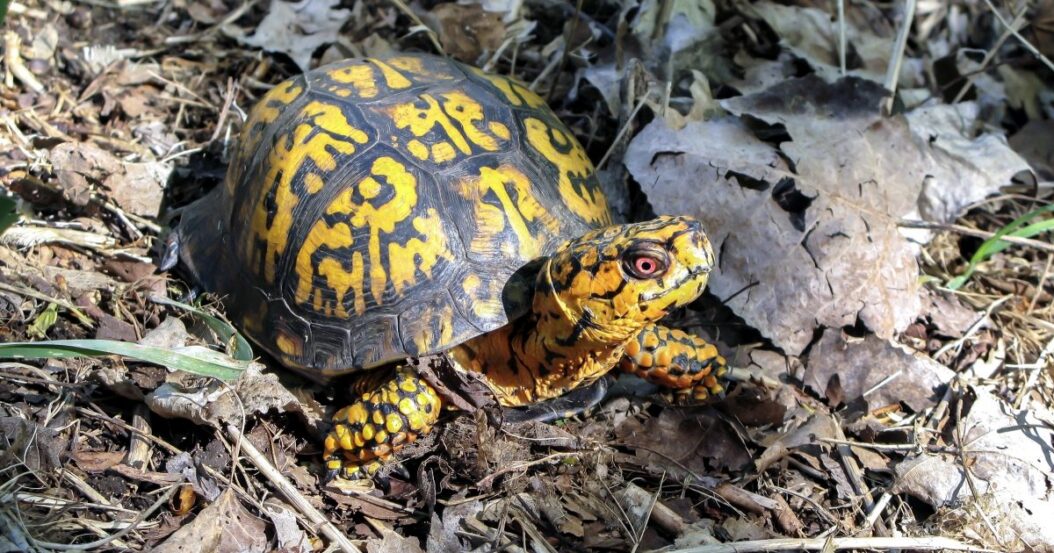
Prized for their striking coloration and docile nature, eastern box turtles are among the native American turtles targeted by organized poaching rings supplying the international pet trade. (Photo courtesy of the U.S. Fish and Wildlife Service.)
220 Million Years of Survival. Now Turtles Face a Human-Made Crisis.
From the family pet trade to international wildlife trafficking, human demand for turtles and tortoises is driving some of the world’s oldest creatures toward extinction.
By Ted Williams
Rabbits they were not. Flopsy, Mopsy, and Cottontail were hatchling turtles — red-eared sliders the size of half dollars, trucked to New England from “turtle ranches” in the South and tended by my sister Susan in the 1960s. Each came with a frying-pan-sized plastic pool with a plastic palm tree in the middle.
Whenever Susan’s raccoon ate Flopsy, Mopsy, and Cottontail, our mother would rush to the five-and-dime store and buy three replacements before Susan returned from school. Susan wondered why extra pools were stacked around the cellar and why her turtles never grew. “Coonie” curtailed their lifespans only marginally. The pools were too shallow. There was no way to warm the water. Room temperature for most of the year is deadly for many turtle species. The “turtle food” purchased with these pets (dried flies and ant pupae) was nutritionally worthless.
Since then, the legal pet trade (based on captive breeding) has improved somewhat. Most captive-bred turtles and tortoises are now sold over the internet or directly at reptile and amphibian expos rather than at pet stores. Still, some are desperately sick and die within a year; basically, these are disposable pets.
“There are very careful, legitimate breeders who only sell healthy, well-started animals and provide good care information,” reports turtle researcher Jim Harding, a lecturer emeritus at Michigan State University. “And there are still unscrupulous ‘fly-by-night’ breeders who don’t care about the health of their animals, who buys them, or what happens after the sale.”
There have been other changes in the pet-turtle and tortoise industry. Some species are no longer available, mostly because 60% of the known 364 species flirt with extinction. While the pet trade is only one of many limiting factors, it has demonstrated that “sustainable harvest” of adult turtles and tortoises, as it’s called in the trade, is an oxymoron.
What’s more, now that many turtles and tortoises are imperiled, they’re protected by nations that once permitted international trafficking. This raises their value on thriving domestic and foreign black markets. For example, many states prohibit or restrict the collection and sale of wild American box turtles, but there’s booming black-market traffic here and abroad.
The stunning success of turtles and tortoises over the last 220 million years has not been a function of fecundity. Most of these animals don’t spew eggs like fish and amphibians; instead, they rely on longevity, replacing themselves over a period of decades. So one wild adult represents an enormous biological investment.
The Deadly Business of Turtle Trafficking
Because of their beautiful coloration and docile nature, eastern box turtles, Florida box turtles, Gulf Coast box turtles, and three-toed box turtles have become major targets for organized poaching rings. On the Asian black market, a single wild-caught North American box turtle can sell for $2,000. Poachers sell box turtles to middlemen, who in turn sell them to smugglers. The smugglers stuff the animals into socks or wrap them in tape, then pack them tightly in falsely labeled boxes.
In these conditions, box turtles and all other turtle species suffer from stress, temperature shifts, injury, and dehydration. And many are exposed to deadly pathogens. When confiscated by U.S. Fish and Wildlife Service inspectors, they must be quarantined for weeks so that they don’t infect wild turtles when released.
Wildlife inspector Joe Ventura told me this: “We’ve seen turtles stacked on their sides like dinner plates so they couldn’t extend their limbs. Turtles destined for the pet trade are often shipped in cardboard boxes that get crushed when cargo shifts, and it’s not unusual to see these boxes crushed and soaked with blood. In one such shipment, headed to the United States from Tanzania, 511 pancake tortoises and 307 leopard tortoises had been packed on top of each other. Fifty animals were dead, 400 appeared near death, and almost all were grievously dehydrated. There was much blood, many broken carapaces, and dozens of missing legs. About 50 females carried broken eggs.”
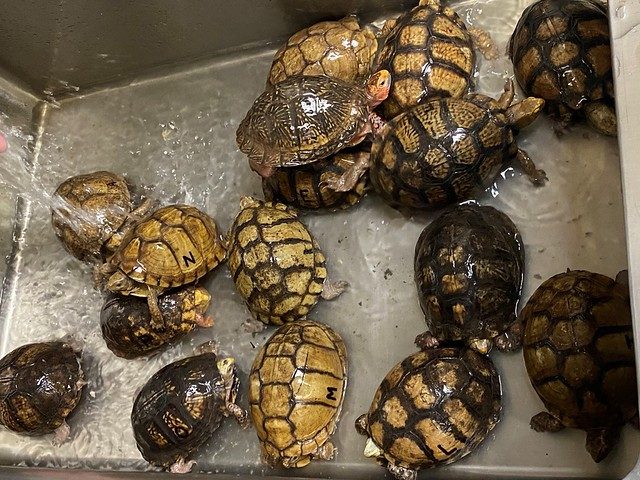
Between August 2023 and November 2024, the Fish and Wildlife Service and federal partner agencies intercepted 222 packages containing some 850 eastern box turtles and three-toed box turtles. Many had been bound in socks and concealed in boxes labeled “plastic animal toys.”
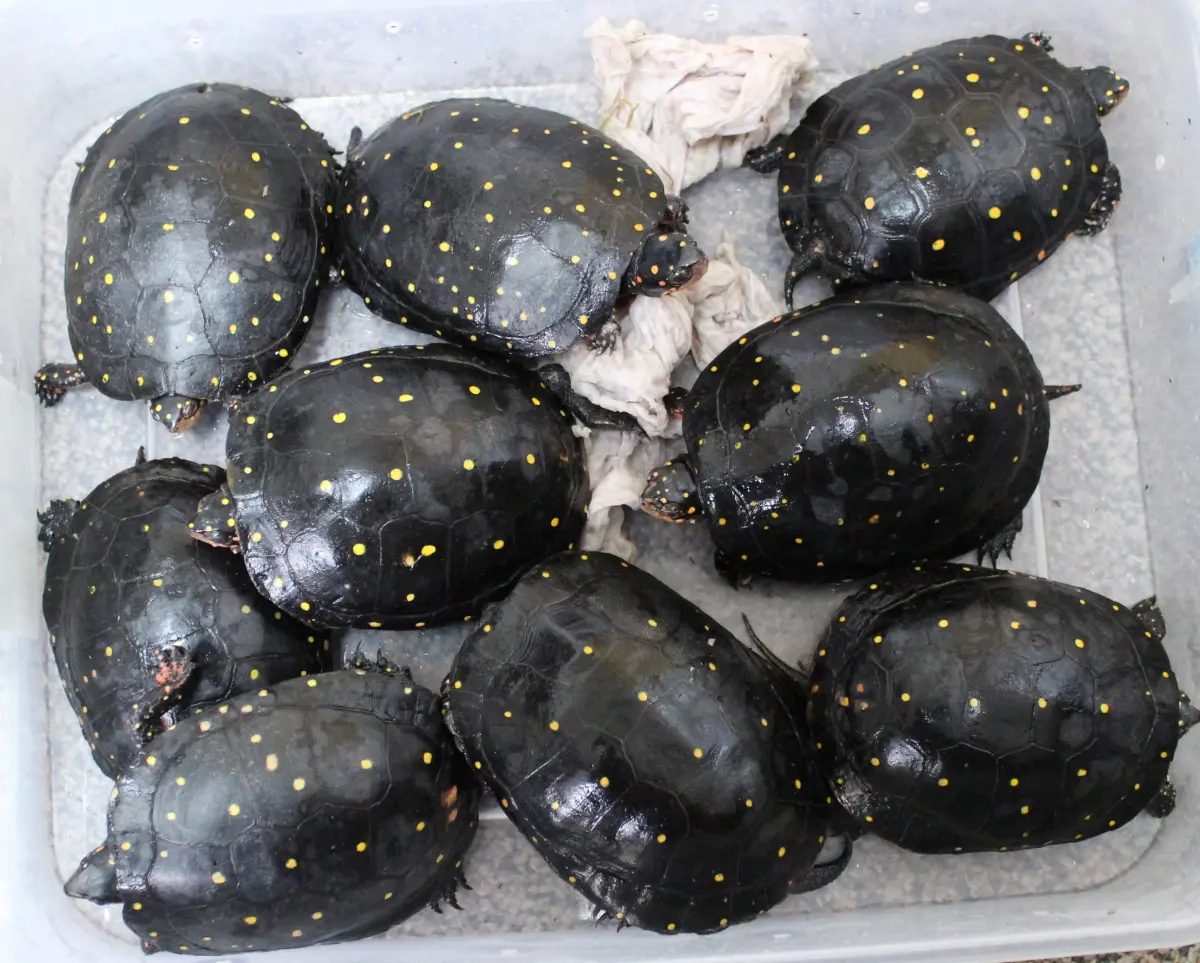
The spotted turtle is designated as a Species of Greatest Conservation Need across all 21 states in its U.S. range — from the Atlantic Coastal Plain to central Florida and west to the Great Lakes region. A single animal sells for as much as $1,000 on the domestic black market and up to $3,000 on the foreign black market.
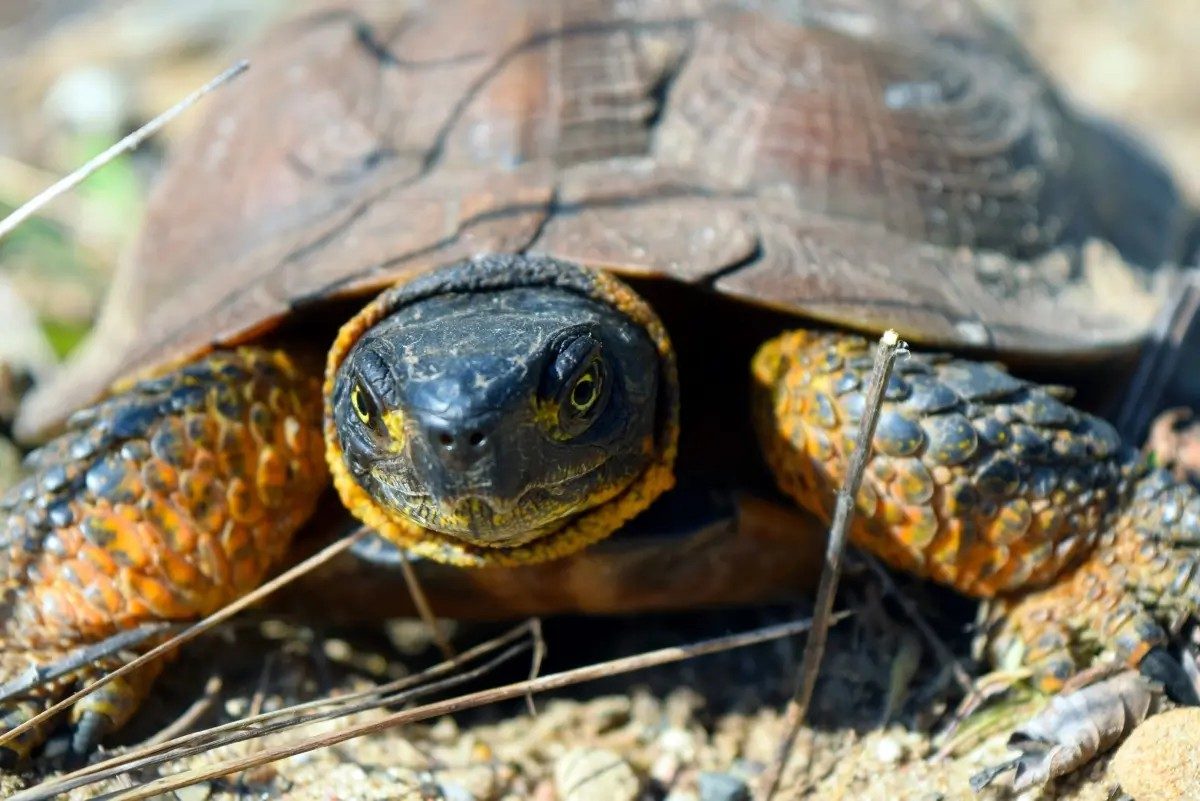
Wood turtles (named not for their forested habitat but for the markings on their carapaces, which resemble carved wood) can live for a century and don’t reach sexual maturity until they’re 15 or 20 years old. So popular are they as pets that illegal collectors and black-market poachers strip entire watersheds across the species’ entire U.S. range — New England, New York, Pennsylvania, New Jersey, Delaware, Maryland, Virginia, West Virginia, Michigan, Wisconsin, Minnesota, Iowa, Illinois, and Ohio.
“You can tell when poachers have been through a drainage,” says Harding. “One ridge over from a normal, healthy wood turtle population, there’ll be nothing. People pick them up by the gunnysack. Even though we’ve slowed that down here in Michigan, every time boaters go down a stream, they pick up one or two animals. Populations get knocked off suddenly by experienced poachers or over the years by incidental collecting.”
The most famous and definitive study demonstrating the impact of incidental collecting was conducted by Drs. Steven Garber and Joanna Burger and published in the November 1995 issue of Ecological Applications. All was fine with their 133 marked study subjects on the 2,471 acres controlled by the South Central Connecticut Regional Water Authority until 1983, when the authority opened the watershed to public recreation. Immediately, wood turtles began to disappear. Garber and Burger were baffled. They checked for disease, road mortality, and predation, finding nothing. Eventually, they discovered that hikers were picking up the wood turtles and taking them home one at a time. In 1991, only 14 remained. In 1992, they were gone. Range-wide population assessments through 2026 show that incidental wood turtle collection remains a primary driver of population loss. And black-market poachers make it worse.
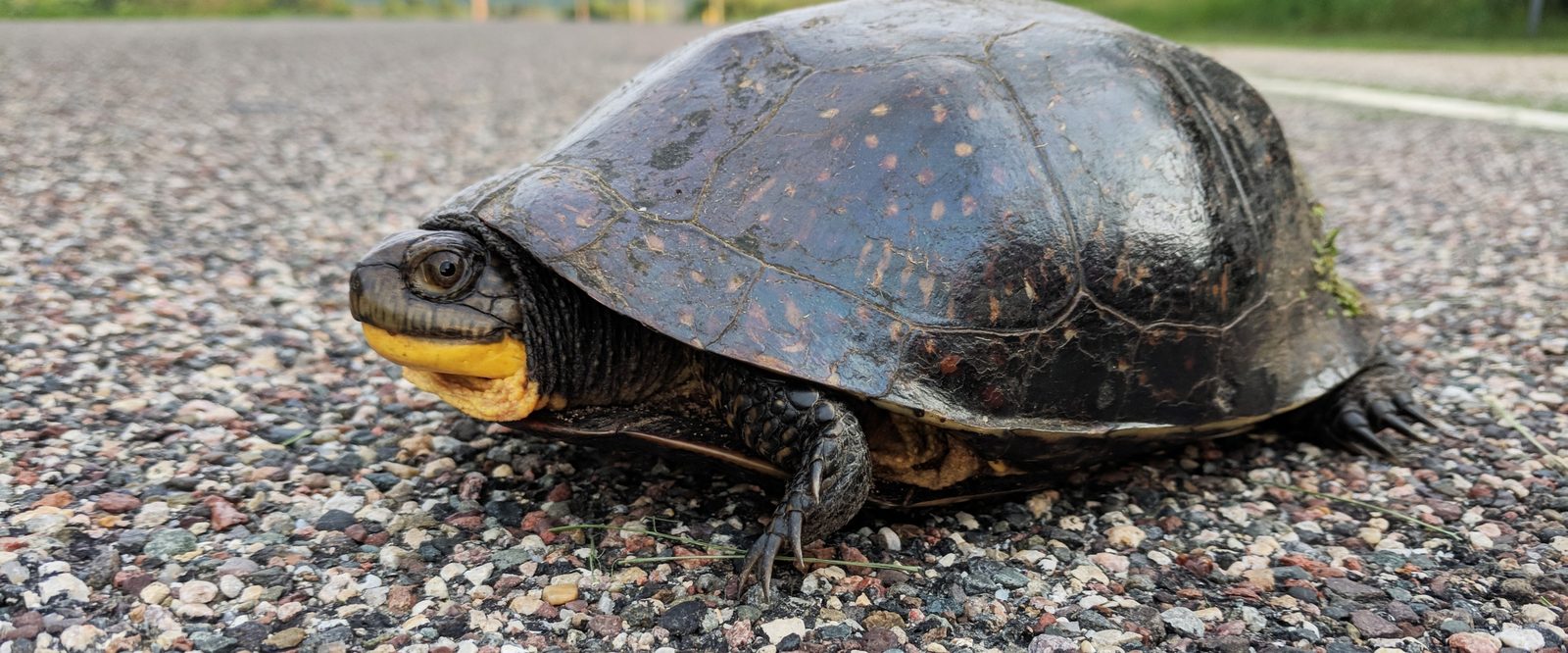
Collection and sale of wild Blanding’s turtles in their native habitat is also illegal, but there is plenty of illegal traffic. And there’s legal traffic in a few states where the species doesn’t occur naturally. These turtles (particularly nesting females) are wanderers and therefore frequent roadkill victims, a major limiting factor in terrestrial and freshwater turtle species. The Blanding’s turtle is therefore widely recognized as a Species of Significant Conservation Concern everywhere it occurs naturally — mostly Midwestern and plains states and southern Ontario and Quebec, but with peripheral populations in New England, New York, Pennsylvania, and Nova Scotia.
The bog turtle, the continent’s smallest turtle, was so depleted by illegal collecting, black-market poachers and habitat destruction that in 1997 it was protected by the Endangered Species Act as threatened. Fragmented populations persist from New England to Georgia. Strongholds, if they can be called that, are in Pennsylvania and New Jersey. To escape summer heat, bog turtles require soft muck provided by spring-fed fens, bogs, wet meadows, and wet pastures. In cooler weather, they need sunlit openings for basking. Most of this habitat has been destroyed by invasive plants that crowd out native vegetation bog turtles evolved with, wetland draining, livestock grazing, and land clearing.
One bog turtle can fetch $1,000 to $2,000 on the U.S. black market, $5,000 to $10,000 when smuggled to Asia or Europe. And because bog turtles live in small, spring-fed wetlands, a poacher can wipe out an entire population in a day.
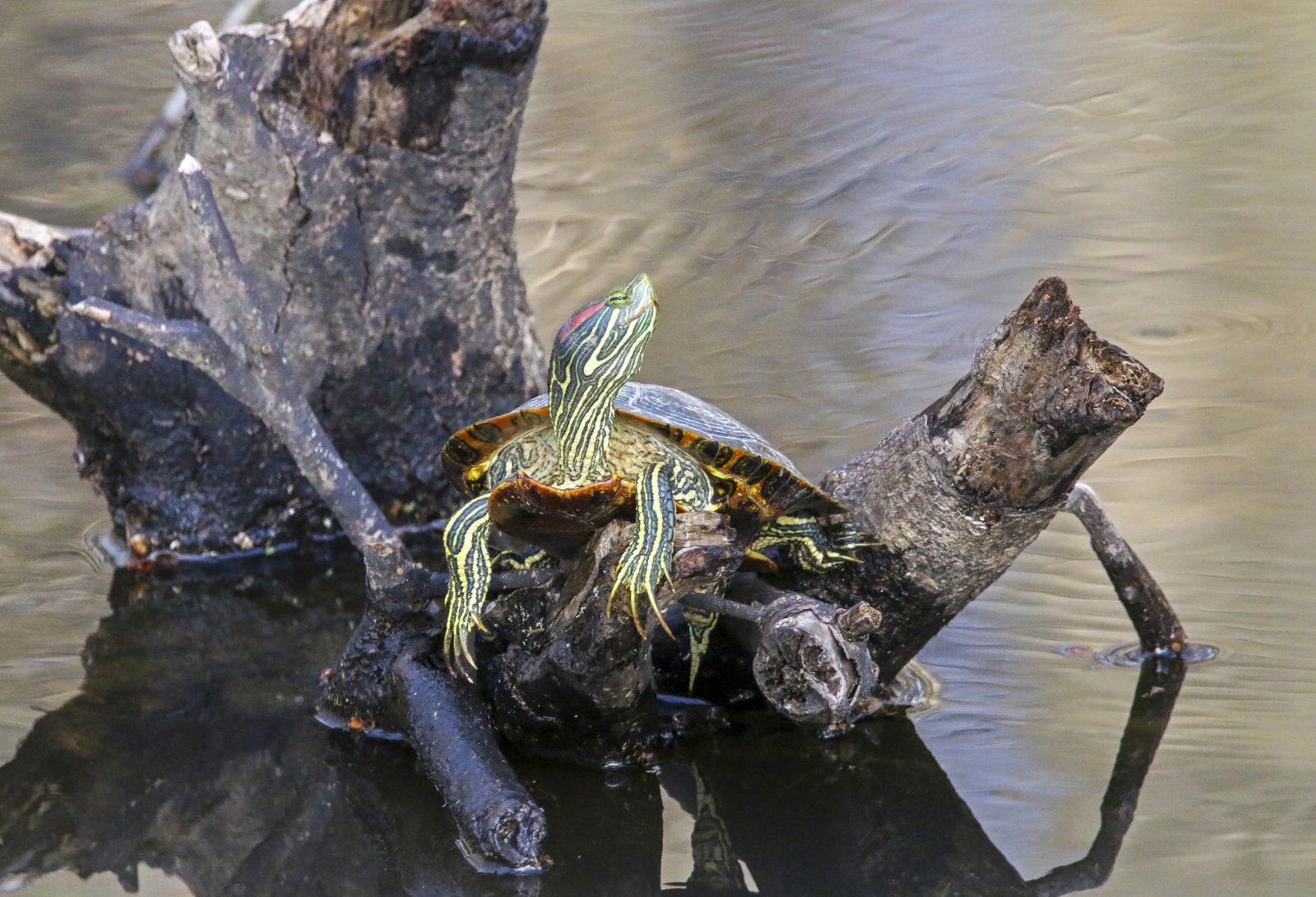
Legal sale of red-eared sliders in the U.S. is still brisk, but not the half-dollar-size ones Coonie enjoyed. Ranched turtles were fed slaughterhouse offal rich in salmonella, and when children put the hatchlings in their mouths, they’d get sick.
Before 1975, pet turtles were causing an estimated 300,000 cases of salmonellosis per annum, so in that year the Food and Drug Administration banned domestic sale of all turtle species less than 4 inches in length. Red-eared slider ranches (which weren’t ranches at all but fenced-in ponds into which adult turtles from the wild were continually dumped for breeding stock) responded by catching even more wild adults for sale in the U.S. and by shifting the hatchling trade overseas. Even today, 3 million to 4 million red-eared slider hatchlings are annually exported from the U.S. to some 50 countries, primarily in Asia, Latin America, and the Middle East.
Still, red-eared slider turtle ranches are going belly-up because so many countries have banned imports and sales and because the Chinese now have their own breeding facilities that pump out millions of turtles for human consumption. Requiring only adult-sized turtle sales has further harmed declining populations of all species. Hatchlings are far more ecologically expendable. Only a tiny fraction of hatchlings reach maturity, and those that do have high survivorship.
Dealers salvage wild turtles and tortoises from food markets in China, where some consumers believe that humans acquire longevity by eating turtle and tortoise meat. While the Chinese devour enormous quantities of farmed turtles, they prefer wild ones, whose “experience” in surviving supposedly renders their flesh better for imparting longevity. Reeves turtles (also known as Chinese pond turtles) were probably the country’s most abundant species 50 years ago. Now, they’re essentially extinct in the wild. Everywhere, but especially in Asia, collecting turtles and tortoises for food has been far more destructive to native populations than the pet trade.
The Chinese consumed most of their wild turtles and tortoises long ago. As China’s economy opened to international trade, demand increasingly extended to turtles and tortoises from other countries. All the turtles and tortoises native to Southeast Asia — 90 species, a quarter of the world’s number — face extinction. “The greatest reptile crisis since the demise of the dinosaurs” is how Tufts University reptile and amphibian veterinarian and professor Dr. Barbara Bonner (1957-2003) assessed it.
A Global Trade in Turtles — and Disease
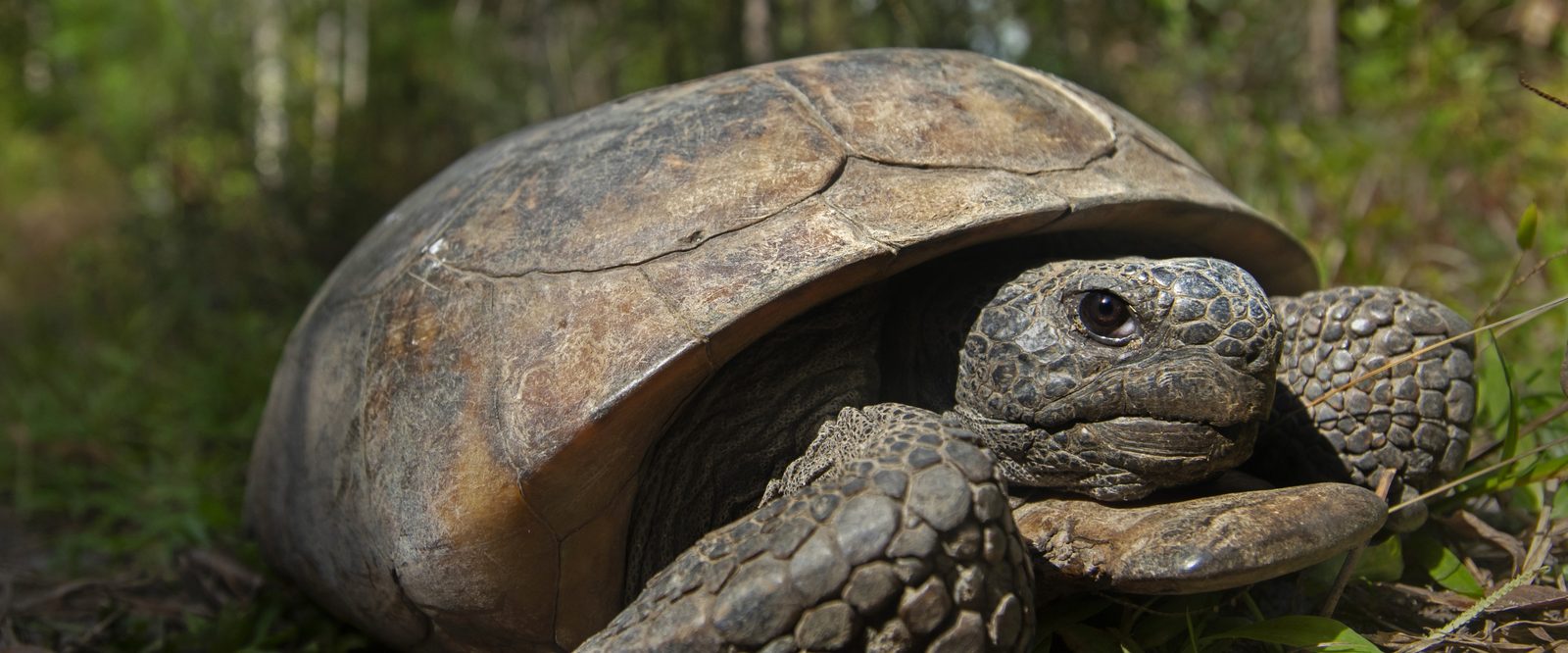
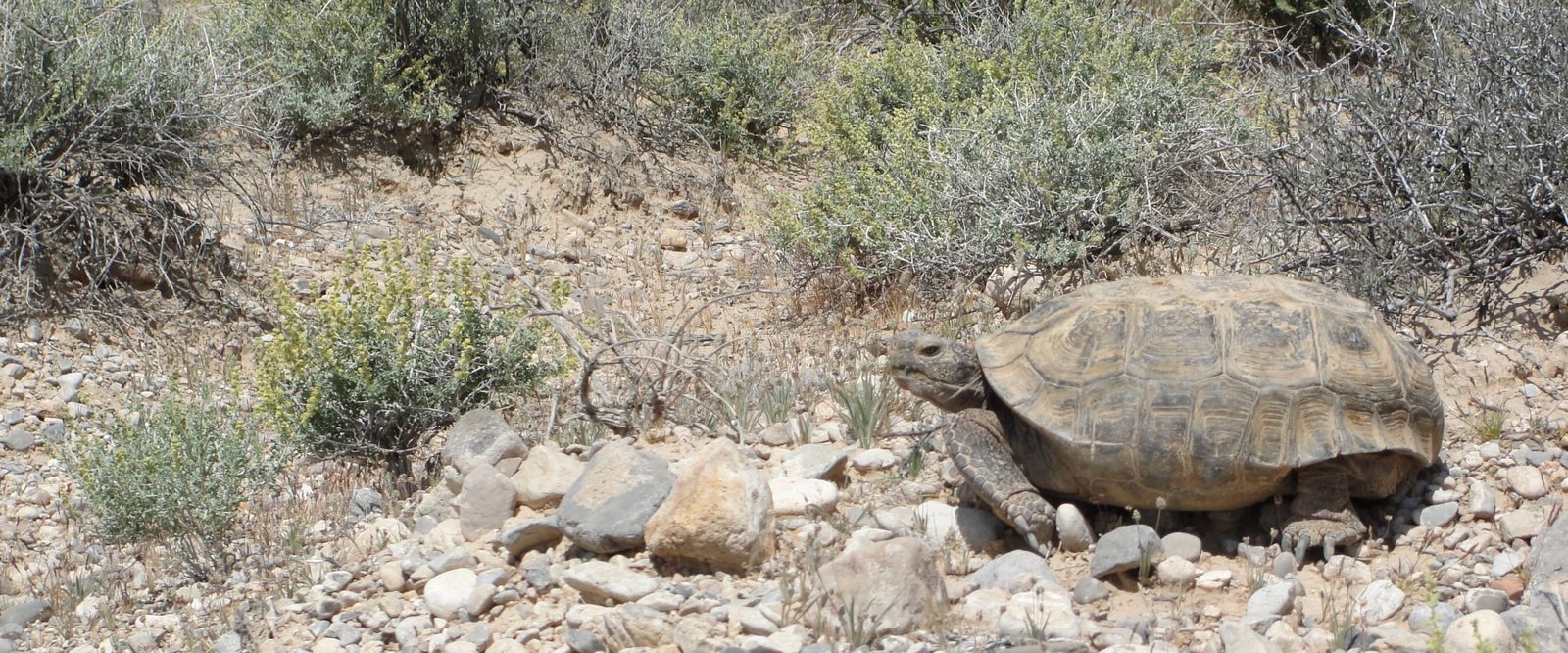
Along with turtles and tortoises, we’re exporting and importing their diseases. Federally threatened desert tortoises are getting clobbered by native and nonnative strains of herpesvirus, Mycoplasma, and Ranavirus. At least 400,000 desert tortoises — far more than exist in the wild — are kept as pets in California and Nevada. Where these three deadly, contagious diseases are encountered in the wild, released or escaped pet desert tortoises are almost always found nearby. The same diseases are killing federally threatened gopher tortoises in the Southeast and wild turtles across North America.
Further facilitating the spread of these and other maladies is the belief among Asians that good karma can be had by being kind to turtles and tortoises, i.e., setting them free. In America and around the world, you can buy these animals for the express purpose of releasing them, often in places they don’t belong. In New York City, a dealer of Florida softshell turtles, a species that requires warm freshwater, sold a load to a Buddhist temple, then watched while the animals were ceremoniously dumped into New York Harbor.
When pets get sick or their owners bore of them, the animals are tossed or flushed into habitats occupied by native turtles. For example, red-eared sliders, naturally occurring in the Mississippi drainage from Indiana and Illinois south, are now established in the wild all over the world. In Washington state, they’re threatening vanishing Pacific pond turtles by infecting them with pathogens and competing for nesting habitat. In the American Southeast, red-eared sliders are compromising the genetic integrity of yellow-bellied sliders by hybridizing with them. The European Union has banned imports of red-eared sliders out of concern for European and Spanish pond turtles.
Dr. Bonner founded and ran the Turtle Hospital of New England in Upton, Mass., a mile from my house. Much of her work was with Southeast Asian turtle species, which arrived in frightful condition. Many hadn’t eaten for six months, and some had been packed in ice. Having been kept in filthy water and mixed with turtles of different species, they were loaded with pathogens and parasites. Typical was the flower-box turtle mailed to the hospital by a collector in Chicago. When I saw it, its eyes were crusted shut. It was septic, emaciated, on a feeding tube, and receiving 10 intravenous medications. Yet, tenuous and pathetic as its existence was, this turtle was one of the lucky ones.
Back then, smugglers could make a profit even if half their shipments arrived dead. These days, turtles and tortoises are worth so much more that larger percentages make it through transport. Still, there are illegal importers and exporters who tolerate big losses.
As Coonie taught us by drawing blood from me and my three siblings, wild animals make terrible pets. Having watched my sister’s disposable red-eared sliders cascade into a black hole of pestilence and predation, and having raised a turtle-doting daughter, I offer the following advice to parents. All children who beg for pet turtles should be ignored for two months. If they persist after that, it’s OK to listen. Ask why they want such a pet. Fondness for the television cartoon show “Teenage Mutant Ninja Turtles” is not a sufficient reason. When the series debuted in Britain, one pet dealer reported a 400% increase in turtle sales.
If you know someone who keeps a pet turtle or tortoise, ask if you can have your child dump the smelly turtle water, wipe the green scum off the sides of the tank, and then scrub the brown slime from the turtle’s carapace and plastron. Or, if it’s a tortoise, have your kid remove the feces and rotten food from the cage.
Lastly, have him or her present food to the pet. With luck, the turtle or tortoise will deliver an accidental though memorable nip.
Want to help? Support the Turtle Survival Alliance, which funds or supports conservation work in 30 countries, protecting habitats and providing resources to save the most imperiled turtle and tortoise species. Where populations cannot currently thrive in the wild, its captive-breeding programs preserve opportunities for their future survival.
Ted Williams writes exclusively about fish and wildlife. He serves on the Circle of Chiefs of the Outdoor Writers Association of America and is a former information officer for the Massachusetts Division of Fisheries and Wildlife.