
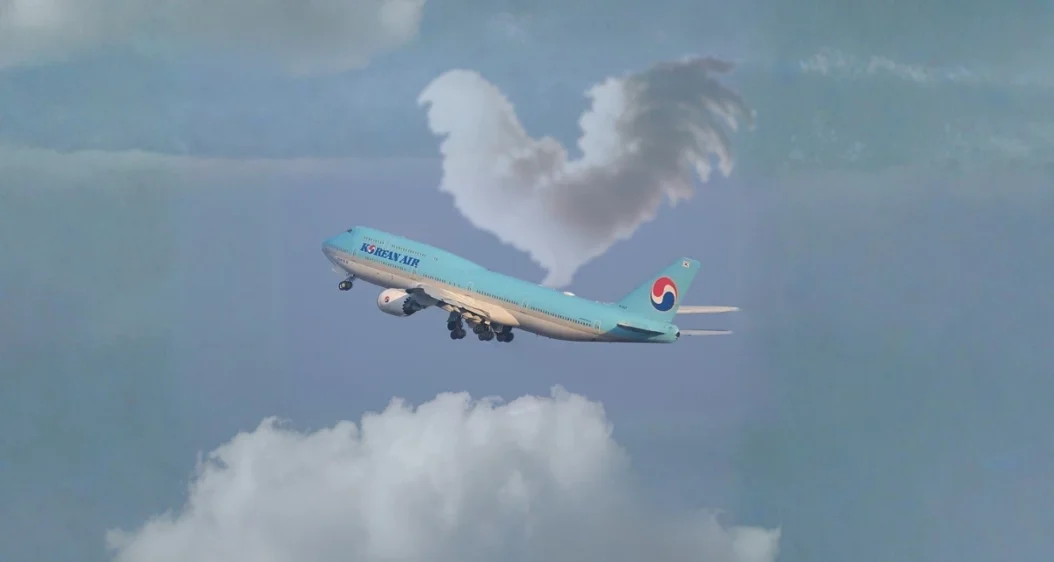
Korean Air Must Finish the Job and Not Act as a Getaway Car for Cockfighters and Their Smuggled Fighting Birds
We applauded the carrier for closing one pipeline to the Philippines. Now the company is playing dumb as cockfighters route their fighting animals through Vietnam.
- Wayne Pacelle
Just two months ago, we lauded Korean Air.
After we presented the company with the results of our undercover investigation, the airline agreed to stop accepting shipments of live roosters raised in the United States and shipping them to the Philippines to die in staged knife fights in cockfighting arenas.
We took the company at its word that it was an unwitting transporter in a $100-million-a-year illegal trade in cockfighting birds between the two nations. The airline’s executives in Seoul, after originally reviewing the evidence our investigators assembled, told us they’d stop shipping birds on flights originating from Dallas, Los Angeles, or Atlanta and bound for Manila.
We told you that the company was acting as a responsible corporate citizen by divorcing itself from this barbaric, illegal trade.
But we also warned the company that the highly organized cockfighters would not simply accede. They would look for another route.
It went exactly as predicted.
Our investigators have now documented that traffickers are shipping birds on Korean Air flights from the United States to Vietnam and then transferring them to a different airline for the final hop to the Philippines. And we’ve provided Korean Air with the evidence that American cockfighters are still using its cargo services to supply fighting birds to the Philippine pits despite its earlier commitment.
The routing changed. The illicit commerce did not.
You don’t get a pass if you are a gunrunner and hand off your cache of weapons to a co-conspirator airline to complete the act of smuggling.
If it’s wrong to ship fighting birds to Manila, then it’s just as wrong to ship them to Ho Chi Minh City and then hand them over to a second airline to complete the illicit transaction.
We’re calling on Korean Air to get out of the cockfighting transport business entirely.
This Form of Animal Smuggling Is a Federal Felony
U.S. law has made air transport of fighting animals illegal since 2007. And the evidence we’ve provided to Korean Air about its role in illegal transport of fighting animals is overwhelming.
Originally, we identified a Dallas-area shipping firm — operating under the false flag of the North Texas Livestock Service, which functions as a cockfighting front — collecting fighting birds from breeders throughout the South and Southwest and exporting them overseas. We worked with The Dallas Morning News to document cockfighters loading up the birds at DFW Airport, after collecting fighting birds from across the Southwest.
Our undercover investigator then traveled to Manila during the World Slasher Cup in January and photographed and filmed American cockfighters handling their American birds in the giant Smart Araneta Coliseum in Manila. We shared those images with Korean Air, along with evidence identifying the exporters as active participants in the cockfighting industry.
Korean Air charges as much as $180 to ship a single mature rooster from the United States to Southeast Asia. What legitimate farmer would spend that kind of money to export an ordinary chicken?
The answer is obvious: no one would.
These are not broiler chickens destined for meat production or laying hens for egg production. They are specialized gamefowl bloodlines — Hatches, Kelsos, Sweaters, Roundheads, and other breeds specifically reared and trained for cockfighting.
The enterprise only makes economic sense if these are specialized birds destined for the Filipino fighting pits, where imported birds can command prices of $2,000 or more.
The claim that these shipments represent ordinary agricultural commerce is a ruse. A masquerade. A scam. And you don’t have to be Sherlock Holmes to unpack the crime.
Closing One Route Isn’t Enough
If a shipment ultimately reaches the same cockfighting arena after a second stop, the ethical, legal, and reputational concerns remain exactly the same.
This was never about one destination listed on an air waybill. It was always about preventing fighting birds from entering an international trafficking network built to conduct animal cruelty.
We appreciated Korean Air’s willingness to engage with us and its initial decision to halt direct shipments of fighting animals to the Philippines. But the company’s policy is insufficient.
The airline has a moral and legal responsibility to adopt a comprehensive policy prohibiting shipments of mature gamefowl from the United States to any other nation. There’s no logical explanation for these birds to be shipped to Asia, other than for cockfighting.
It’s all the same if it’s a direct flight, or a two-stop flight, or a baton pass to a second airline. The people behind this are organized criminals. At the receiving end, they are involved not just in animal cruelty but in billions in illegal wagering, murder, and other mayhem.
This episode also demonstrates why Congress should enact the No Flight, No Fight Act, introduced by Rep. Troy Nehls, R-Texas. Nehls chairs the Subcommittee on Aviation, where the bill, H.R. 7371, is assigned.
Federal law should establish a bright-line rule restricting shipments of mature roosters unless the shipper can demonstrate an ongoing, legitimate agricultural purpose.
Korean Air should close the loophole and stop serving as a conduit for the international trafficking of fighting birds — once and for all. Congress should pass the legislation as a stand-alone bill or as an amendment to the FIGHT (Fighting Inhumane Gambling and High-Risk Trafficking) Act, S. 1454 and H.R. 3946.
Cockfighters in the United States have become the gamecock breeding ground for the world. By stopping the long-distance air travel of fighting birds, we cut off their profits and shutter their despicable criminal enterprise. Any company or lawmaker on the wrong side of this debate is abetting crimes of the most serious order.
Wayne Pacelle, president of the Center for a Humane Economy and Animal Wellness Action, is the author of two New York Times bestselling books, “The Bond” and “The Humane Economy.”
Dear reader: If you support substantive policy work to protect animals, please consider donating to the Center for a Humane Economy today. You can give any amount one time, or make it a monthly gift, as many of our supporters do. Thank you for helping us fight for all animals.